• Blog
  • Inquiry Archive
  • About
Menu

Inquiry Of The Day (IOTD)365

  • Blog
  • Inquiry Archive
  • About

How do you bring passion to your projects?

June 11, 2016

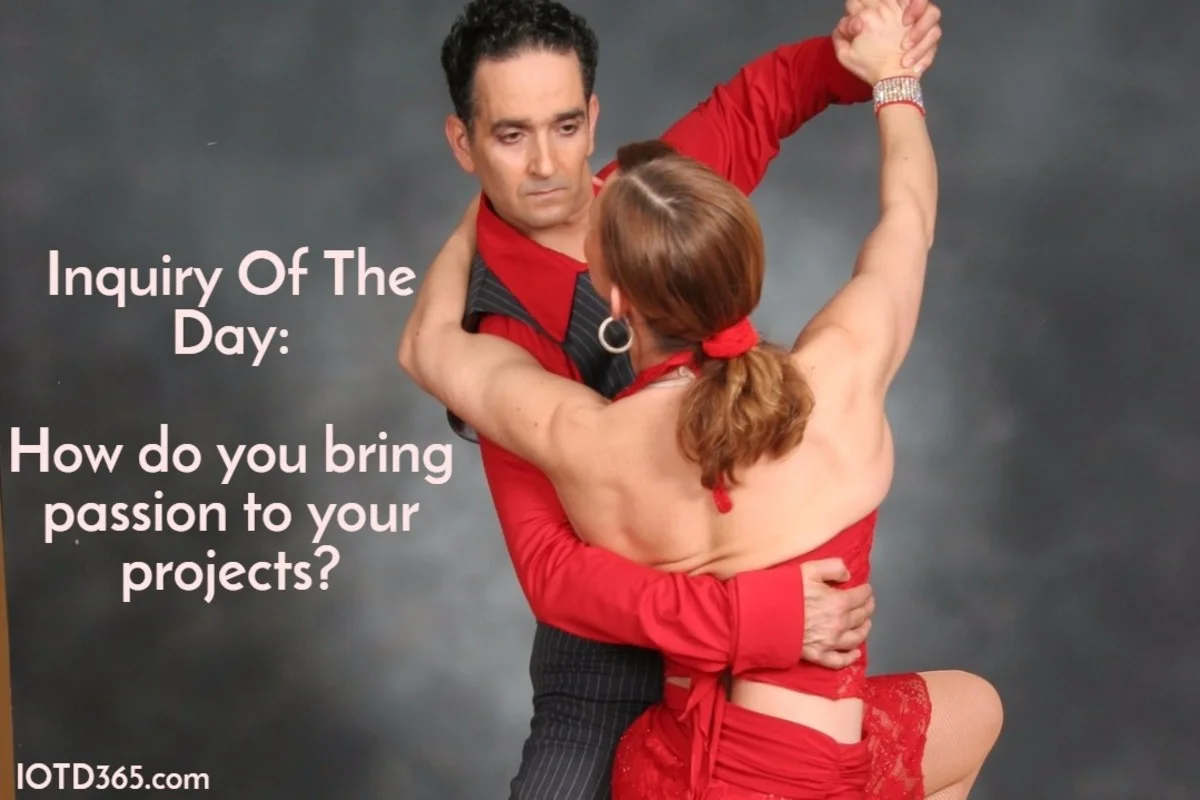
Last night, I was the timer (aka; evil clock guy) as eight finalist competed for a top prize of $50K to grow their business. The Global Challenge Cup competition saw 3,000 pitches over the last year through the incubator 1776, headquartered in DC. At the end of the evening, all 60 international startups that were in the run-up to the finals this week, did a 30 second pitch for a $10K People’s Choice Award chosen by the audience. This was a front row seat to see passion on full display. The company offerings ranged from a Fitbit for cows, health care solutions, drone fences and an app to help those in need to find an available apartment in real time. It was energizing to hang out with such a diverse crowd who found a need and are doing something about it. I was freshly reminded about the importance of who we choose to surround ourselves with and the encouragement that comes from those on a mission. My passion trajectory has looked more like a roller coaster than a rocket-ship, but I am working to install boosters to help with consistency. One with passion, doesn't need to be reminded, has eyes to see what needs to be done, and steps forward even for the most mundane task, for no other reason than it must be done. Where do those around you experience your passion? Is it through your diligence, effort, application of knowledge or smiling through the difficulties? Is your passion on display at your job, in your family or through your hobbies? Just as personalities differ, there isn't a one size fits all, but it must be identifiable. Today, you could live a happy life of watching endless movies made by someone else, scrolling endlessly through the news feed about other lives, listening to music sung by other singers and be lowered into the ground with your passion dead, unknown. My heart aches at the loss for those that are unwilling to step forward; it's a missed opportunity for everyone. Write a song, build a robot, raise children, build a business, preach, mentor or perfect your underwater basket weaving technique. You don't know when the undertaker will be taking your measurements. May he not find you in your recliner halfway through your sixth watching of Friends season two. Instead may you be found pushing your love for family through the cancer or belting out that high note you have been working to hit perfectly. Go live passionately!

Where are you intentionally pouring out your passion? 
Comment

What responsibility is waiting for you to take ownership?

June 10, 2016

Society, parents, children or the boss will define what responsibilities we should own. Some decisions we make dictate follow-on responsibilities; bills demand payment, children demand raising and cars demand maintenance. One aspect is the responsibility you have to contribute to the world, that which only you can deliver. This may very well be far beyond a job task or family responsibility. The days of narrowly defining people are over. The Internet has been built by people showing up to provide value and delivering what was once unthinkable. Many have thought that the golden age of the Internet is over, the boat has sailed, but they are wrong. I have been listening to The Inevitable, by Kevin Kelly, regarding "the deep trends in the next 20 years that will shape your life". As an aside, listening to an audio book about the future and the prevalence of driverless cars in the midst of a DC commute, does provide a ray of hope. Artificial intelligence is pervading our world and will free us from mundane jobs and give rise to humans providing value and bringing their interests and talents to bear in ways considered inconceivable today. Much in the same way, a farmer from 100 years ago would evaluate many of the jobs today. Your job of approving or denying an application form will be processed by an instance of artificial intelligence that knows all details of the client, what they can afford and what level of risk to the company they represent. You will have the responsibility to contribute and add value in ways that are truly human. You have a perspective on life to share and there is a world waiting. It is time to be responsible, leave the binge watching to others, cultivate your talents and pursue your curiosity; tomorrow needs them.

What responsibility are you ducking? Where do you need to embrace what is yours and step up? What frightens you about the next 50 years? What excites you about the next 50 years? How do you think your job will be done in 15 years? What can you set aside to pursue your curiosities and talents? What fears do you need to confront as you take responsibility?

Comment

How approachable are you?

June 9, 2016

A co-worker asked if I liked my job. I responded with "yes, very much so; I'm having a great time". Her response; "then you may want to inform your face". Ouch, her words hurt, and it was true. I had believed the lie that if I rushed around the office with a continual scowl then I would be perceived as serious about my work. I wanted to be diligent, stay focused on the task at hand and not waste time with idol talk, but I may have taken it a bit too far. I needed to find the happy medium between rebuffing the endless time suck of office politics and being approachable. A standard metric to gauge feedback is that for every negative comment received, there are seven others that have had a similar experience and don't engage in the feedback loop. Reasons include; they don't want to kick-off a potential conflict, don't think their voice will make a difference or just don't care. Application of this metric would determine that there were many others around me that were not willing to engage and mention the effect of my scowl on the work environment. I am grateful for this co-worker and the willingness to bring it to my attention. For me, the direct nature of the comment, helped the lesson stick. Bad news doesn't age well and approachability makes it easier for someone to share the news, free of the concern about becoming a dead messenger. I needed an outside observation to help me see clearly. You are probably more self-aware than I and well ahead of me, but it may be worth asking a couple confidants their thoughts. This input caused be to do some analysis, question my motives and helped me to start to change. On the family front, fear of approaching is good for the young man that wants to date my daughter, but it is not good if my daughter fears talking to me. If a co-worker had not cared enough to ask a question, communication would not have improved and the organization would have suffered. It is amazing how many people will say "hi" when you are dashing from meeting to meeting with a smile on your face; things are changing for the better.

Do you want to be approachable? Do those around you fear delivering bad news? What has informed your communication style? Have you changed over time? How do you know you are approachable? Who can you ask to get a straight answer? What changes do you need to make? What impact would you hope any change to make? What is one step you can take to make a change?

Comment

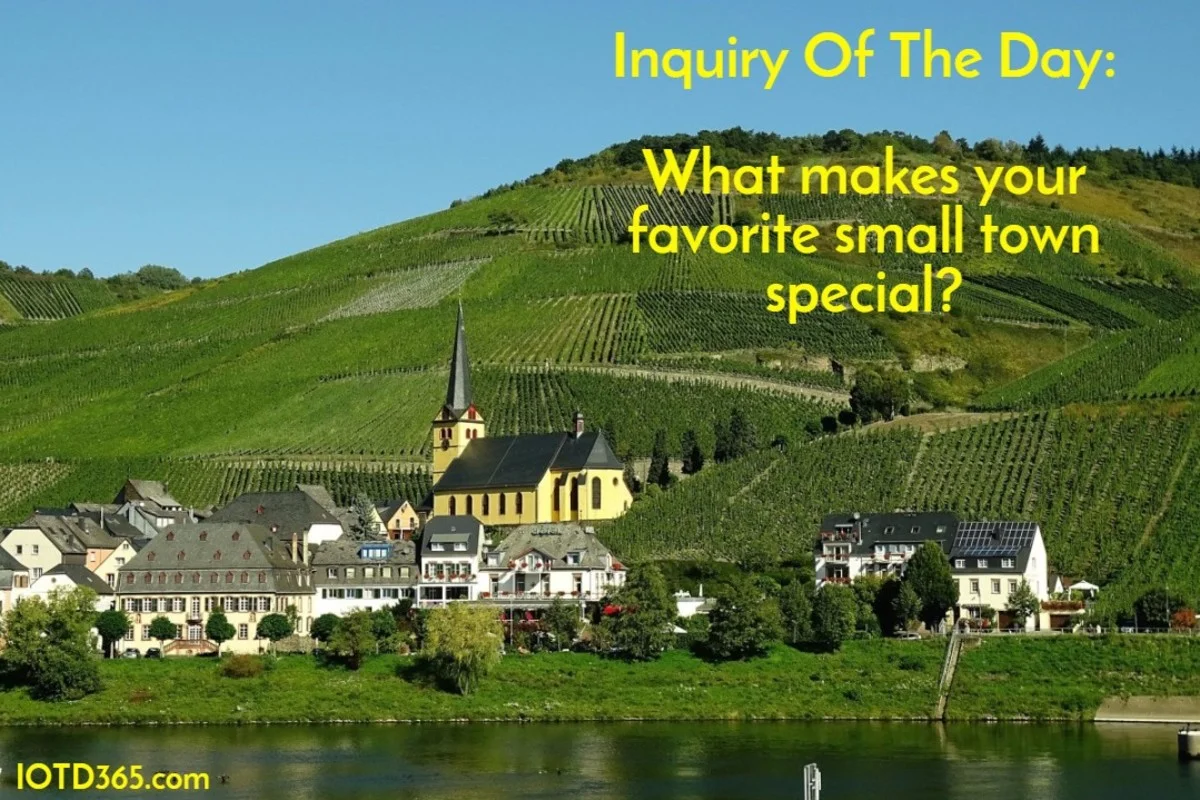
What makes your favorite small town special?

June 8, 2016

Forget the Internet debates, you can define what is small when answering the question. Middleburg Virginia is my favorite small town. It is not too far away, is an easy getaway, has just the right shops and is surrounded by wineries in the rolling countryside. Established in 1787 with a purchase of land from a cousin of George Washington, it now boasts a population of 632 and is known for foxhunting and steeplechasing; neither of which I have participated... yet. I grew up in Prescott Arizona, which was incorporated in 1883 surrounding the mining industry and had a population of 27,000 when I was there and is now just over 40,000. This was a great place to grow up, but has probably outgrown the title of small town. What sets apart your favorite? Each town has its own eccentricities because it is made up of interesting characters just like you and me. How the town was settled and the family that owned the big house on the hill all make for fascinating stories. You know the story about the old spinster lady that may have murdered the young drifter, but nobody like to talk about it or the only time the city was mentioned on the national news was when a twister ripped half the city apart. These are the kind of places that have amazing stories about real people; everyone knows about it and has an opinion. The upside is that you actually know your neighbors, have borrowed a real cup of sugar before and enjoy a life that is a bit slower. In light of the commute today; this sounds real appetizing.

How did you find out about your small town? How often do you make it back to visit? What is a story from the town's history? What convincing would be necessary for you to make this town your home? What other small towns do you like? What is a common characteristic between towns?

1 Comment

What is your encouragement to correction ratio?

June 7, 2016

Yep, this one hurt the first time I was asked. The query was about my encouragement to correction ratio toward my family, and the numbers were not encouraging. The first step is even being aware this ratio exists, whether you know your numbers or not. However, your co-workers know, your friends know and your family knows your ratio. The gold standard ratio I was working to was 10/1. Achieving that number took serious work and I was tracking this ratio on a weekly basis. This required awareness of the little things since my 10 year old was only going to rescue so many kittens from the neighborhood tree or help so many old ladies across the street before I needed to bring correction. Unable to count on those random acts of kindness, I had to pay attention to chores being done, kind words spoken or catch him doing something worth specific encouragement. I couldn't count the generic, empty "your such a good boy" phrase; specificity was required.  A 2013 Harvard Business Review article pegged the ratio for high performing teams at 5.6 to 1 and low performing teams at 0.36 to 1. I ain't a math wizard, but I know enough to recognize that the low performing team has a low ratio and I have a pretty good idea that this is not where I want to work. The high performing team number sounds like an environment that has a good balance, recognizing the importance of acknowledging work done well and the value of investing in the hard work of constructive feedback. Keeping this ratio at a healthy number is an investment in the long game. The study found that married couples that succeeded had a 5 to 1 ratio; once again, a team playing for the long game. So, what do you think, what is your ratio? This may very well challenge your management or relationship style. If you choose to be the dictator, rarely passing along an encouragement or the doormat that rarely provides corrective feedback because you fear confrontation. We operate under a set of assumptions that drive our interactions with others and adjusting our ratio may require a closer look at our operating assumptions. Whether you believe the study or shoot for the gold standard, it is good to determine your target ratio and take action to achieve required changes. The most encouraging aspect of this inquiry, is that you can start changing your ratio with your next interaction.

Is your current ratio an encouragement or discouragement? What is a healthy ratio for your relational circles? How do you think hitting your target ratio will impact those around you? Is there a different ratio for your various relational circles and do any of them need to be realigned? What relational assumptions do you need to re-evaluate? Are you encouraged that change is as easy as a decision?

Comment

Which virtue fails first, when you are tried?

June 6, 2016

Unfortunately, I can relate to the hangry characters in the Snickers commercials. If I am fasting or know I will be without food for a longer period of time, then there is a fighting chance for me to cope. However, patience goes right out the window when the hunger pangs start speaking louder than me. A quick Google search turned up an impressive list of virtues. An component of self-knowledge is to know your particular weaknesses, how to avoid or how to shore them up when needed. The combination of a taxing day and hunger have proven the downfall of any chance of dietary self-control for me. It is amazing how quickly I can justify eating a large bowl of ice cream because I don't have time or I'm too hungry to throw together a salad. Planning ahead or putting stopgaps in place to ensure I don't find myself in these situations is my only hope for survival. My go-to stopgap against baked goods is to not have them in the house. That one "special" customer that no one wants to deal with, the barista that doesn't get the latte quite hot enough or the punk that wants the spot in front of you during the commute; what is your temptation for the virtue collapse? Your response can take many forms and may depend if the five-year-old is in the backseat watching, preparing to quote you at the dinner table. A prayer, meditative deep breathing, clenched fake smile, cursing or a full-on vent are a smattering of examples on the response spectrum. I have found that age has helped to temper my responses to life's difficulties. Often, we don't notice our own growth in this area. This a marvelous opportunity to engage those that know us best and get feedback on positive changes they have witnessed.

What virtues require serious trials to knock you off your game? What trigger points do you have for particular virtues? What tools or practices do you use to minimize the impact of trials on your wellbeing? What virtue would you like to improve and what is a step you can take to make progress? How do you seek out observations, from those you trust, to help you identify virtue gaps and to help you grow? Where have you experienced the most growth and are most encouraged?

Comment

How are you applying your last read?

June 5, 2016

If the ink is still drying, then I am buying seems to be the idea among the written word enthusiast. New books are published each week, based on new science or a new perspective on existing knowledge. Authors do the obligatory book tours across all media channels to get the word out and it seems to work, at least on me. I enjoy many authors and much to my wife's chagrin, it doesn't take much for it to be added to my library. I began reading business and soft skill books in the late 80's when I started a multi-level marketing business and have continued to read this genre and added several more along the way. If I take a step back and consider the amount of words read and the hours invested; I have probably already consumed the latest material in an earlier form and despite good intentions, have yet to apply. Once we close the back cover and reflect on how the truths could make a difference in our lives, the hard part begins; application. I have books, on the nightstand, waiting their turn for my attention. This is the part that stings a bit; I think I am a great at consuming, but poor, at best, at application. I assume most authors desire the evaluation and application vice just selling another book. In October, the Pew Research Center found “among all Americans, the average (mean) number of books read in the previous year was 12 and the median (midpoint) number of books read was four”.  I understand that you are above average and therefore you will cull through many more books and find many more points of application. Well done! Now, was there a particular point, one specific practice, one thought or one verse out of the entire tome that was worth implementing into your life for the long term? Before picking up the next volume, it might be worth ensuring the time invested earlier was well spent and work on application of a nugget in the last read. 

How do you internalize what you have read? How often do you revisit the books you’ve read? How do you select a title to read? What have you reread the most? What Internet postings do you pay attention to and apply? What other question comes to mind?

Comment

Solitude. How does it feel?

June 4, 2016

The average reading speed is 200 words per minute and I generally write about 400 words. 

Dedicate 2 minutes to solitude; this is for you.

Close your eyes and invest.
. 
. 
. 
. 
. 
. 
. 
. 
. 
 No peeking.
. 
. 
. 
. 
. 
. 
. 
. 
. 
. 
. 
Now that wasn't so hard.

How do you feel? What do you think about intentionally setting aside time to be quiet? Were you ok with being by yourself and not busy? What would be the benefit of doing this more often and for a longer period of time?

Comment

How do you make space for curiosity?

June 3, 2016

There is no time for curiosity. You have a commute, an important job with plenty of overtime, a mortgage and kids with homework and sports. Personal and professional deadlines hound you and the need to stick with processes and regulations ensure you stay focused. Keep your eyes on the task at hand. I know, you don't really have time to even be reading this post because the urgent or honey do list is pulling at your pant leg. Something else is waiting for your attention and it is very patient. This dear friend sits in the shadows. If necessary, it will wait your whole life, sitting on the sidelines, awaiting your notice. This companion was by your side in the early days as you explored the world around you, trying to make sense of how things worked. Constant questions; what is inside the box, how far does the knob turn, can I make a fort out of it, are dragons always purple, does it fit, what happens if I put it here. You could learn all day with this friend curiosity, by your side. You learned because you had questions and wondered. Now, your curiosity is limited to wondering how many sit-ups will be required to maintain the six-pack abs after the ice cream sandwich or if you can zeroize your inbox by Friday evening. Curiosities boundless energy is hamstrung with the first return of the Google search. Back in the shadows curiosity; I have my answer, there is no need to wonder. A new friend explained how much fun she is having exploring the startup world and what kind of problems these go-getters are trying to solve. She is intentionally pushing back on her schedule to make room to explore and follow her curiosity with much joy. Curiosity was as big as your imagination when you were a child and was able to deliver the world to you. If you desire its companionship, then make space to get reacquainted with your old friend; it is waiting.

What have you postponed learning about because of the demands of life? What was the last thing you were curious about? What is a mystery to you? What kept your interest as a kid? How does the prospect of exploring your curiosity excite you? What 17 minutes could you invest this week to pursue a curiosity? How could you make this a habit? 

Comment

How can you combat the stigma of mental illness?

June 2, 2016

A constant stream of patients asked for a small Dixie cup of water. I asked the nurse why the guests wanted water and she replied that "chaos was all around and a cup of water was something they could control". Water intake is tracked because patients can drink too much water and succumb to hyponatremia when their electrolytes get out of balance. I had the opportunity to help a friend with complex PTSD and included visiting several hospitals in the metro DC area. She needed a safe place to start the process of healing and her experiences caused a hyper sensitivity to much that comprised daily life. The inability to eat well, sleep well and feel safe, kept her in a constant state of fight or flight. I was hard pressed to classify the hospital wards I witnessed, as a healing environment. Another friend returned from Afghanistan and can't enjoy the 4th of July fireworks or burgers on the grill because the sounds and smells cause flashbacks from his deployment. Spending time with these wonderful people has given me a fresh appreciation for how little the medical field really knows about the brain and the ability to undo their experiences.  The military struggles with troops resisting the help that is offered as they don't want to appear weak, but thankfully, progress is happening. I haven't encountered the same struggle, but I experienced a bit of survivors guilt after the Navy Yard shooting and I have experienced swings of depression and felt the anxiety of someone else finding out that I am not Superman. Please don't tell my wife or adult children; they may still believe. The conversation needs to be brought into the light to weaken the stigma of getting help. There is much work that needs to be done and much is at a one-on-one level, engaging with those around us by reaching out to those that have withdrawn or other symptoms.

What is your gut reaction to the term mental illness? How has mental illness touched your life? What do you know about mental illness? Do you know the symptoms? What positive treatments have you encountered? What conversations do you need to have with those around you? How can you help those around you?

Comment

How do you employ the gift of accountability?

June 1, 2016

Are you kidding me? He is laughing so hard, he can't breathe. I am in distress, feeling my life is over, and the guy who has kept me accountable for years is doubled over laughing at me. This however, is exactly the care I needed. Wes recounted that I had put myself in similar situations about every 18 months, that I could change the circumstances and that I would surely live another day. Breathe, just breathe; he was right. I have been served by multiple friends that are willing to know me and my multiple idiosyncrasies. Accountability can be as simple as a checklist or an app and as complex as a group of likeminded people. These gifts are taskmasters used to keep us on track and help us see clearly when we have strayed. Need to lose 15 lbs? get accountable; need to break a bad habit? get accountable; need help pursuing your goals? get accountable. Author Elle Luna attributes much of her success to the help of others keeping her accountable through 100 days creativity sprints (Instagram: elleluna). I currently talk with two guys; one keeps me accountable to my goals and the other keeps me accountable as I pursue vulnerability. They have helped me see the world more clearly and ask poignant questions that reveal flaws in my thinking about successes and failures. The longer the relationship, the easier it is to see trends to be spotted as described earlier. In the event I haven't made it clear; I am a fan and highly encourage these relationships.

What tools have you used for accountability? What methods have and haven't worked for you? Why did you stop? How could you use this hack to help you? What stops you from pursuing accountability? What is one step you can take to get accountable on one element of your life?

Comment

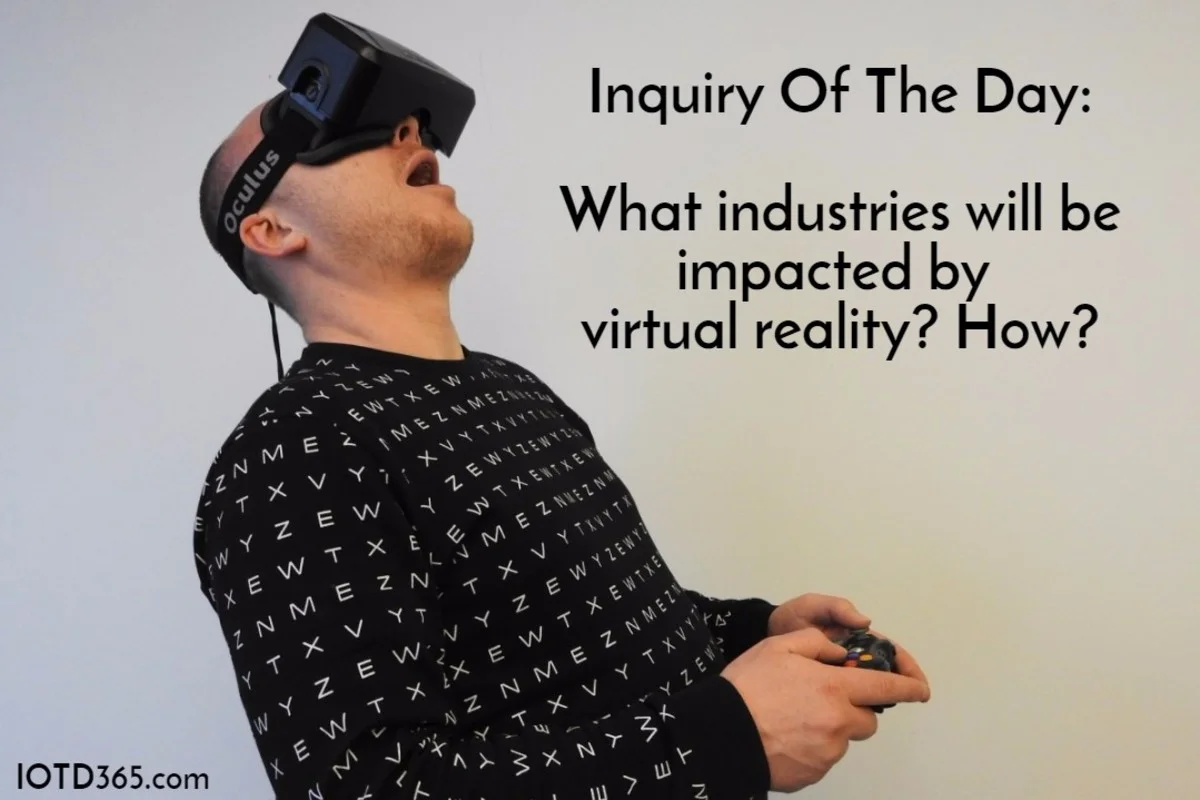
What industries will be impacted by virtual reality? How?

May 31, 2016

The 80+ year old gentleman is convinced the next big thing is virtual reality (VR). During a celebratory dinner we were discussing how things have changed and what is exciting about the future. He was most surprised about the cellular explosion and speed of adoption during his telecommunications career and then discussed today's question regarding the future. The promise of VR has had some fits and starts; however, a twelve year old named Sidra is helping to shake things up through a United Nations film as she gives a tour of her Syrian refugee camp. Movies are limited to a big screen that allows for looking away or seeing the edge of the screen to confirm we are still in the theater seat. VR will enable the ability to get lost in the experience and better engage at an emotional level. Just as any new technology, industries will be shaken for good and bad. I am assuming that gaming and porn will be the early leaders due to technology familiarity and profits, respectively.  I thought tourism would have the biggest negative impact and entertainment having the largest gain. I look forward to the upheaval in education and expect that as a kinesthetic learner, VR could help me master subjects I have struggled to grasp. Technology always offers hope of a better tomorrow and perhaps this gentleman, closing in on a century of life, may have it right.

Who will be the winners and losers? What new industries will be generated? How will VR impact your industry? What is an application of VR that is not in development? How long before VR arrives in your home? What do you foresee as the greatest benefit to you? How would you anticipate using VR in your daily life? How will VR be used for evil? How will VR incorporate the rest of our senses into the experience?

Comment

What rites of passage have you traversed?

May 30, 2016

Traditional rites of passage appear to be going the way of the Dodo and this is something greater than just loosing heritage. In todays world, the timeline of life can be a bit ambiguous; parenthood starts before High School graduation, sex experimentation starts in middle school alongside dabbling with drugs, the college graduate boomerangs back to the parents basement for a life of video game solitude, gender is as fluid as emotions and a marriage ceremony may never happen. The Jewish Bar/Bat Mitzvah and Latino Quinceanera provide youth with a milepost to reflect upon to understand their growth as they transition to the next phase of life and take on new responsibility. Seemingly, the modern rites  are merely associated with age; 16th, 18th and 21st birthdays or the onset of puberty. Perhaps events along the way; first kiss, first hunting trip, first time to First Base, earning a drivers license or a first drink of alcohol may be considered a rite of passage. High School and college graduations are significant milestones that receive much fanfare, but how does it work if a graduation didn't happen? Traditional rites of passage are used to celebrate where we have been and with a rich tradition of support, provide assurance that we are prepared for the next step. Many of the modern rites automatically happen with age or are celebrated in the dark of night with a red Solo cup. These events seem to fall short of what our forefathers experienced and don't quite measure up. As an aside, I don't know where on the rite scale it falls, but changing your first poopy dirty diaper is a rite of passage; no question, that stench is a rite and you get credit. It is worthy to have a conversation before the rites are extinct.

How have your rite of passage experiences shaped you? What meant the most? What rites have you missed out on or wish you had celebrated? What rites of passage have you participated in for others? Parents, how are we intentional about celebrating rites of passage for our kids? What rites of passage question should be answered?

Comment

What lesson do you remember from your commencement address?

May 29, 2016

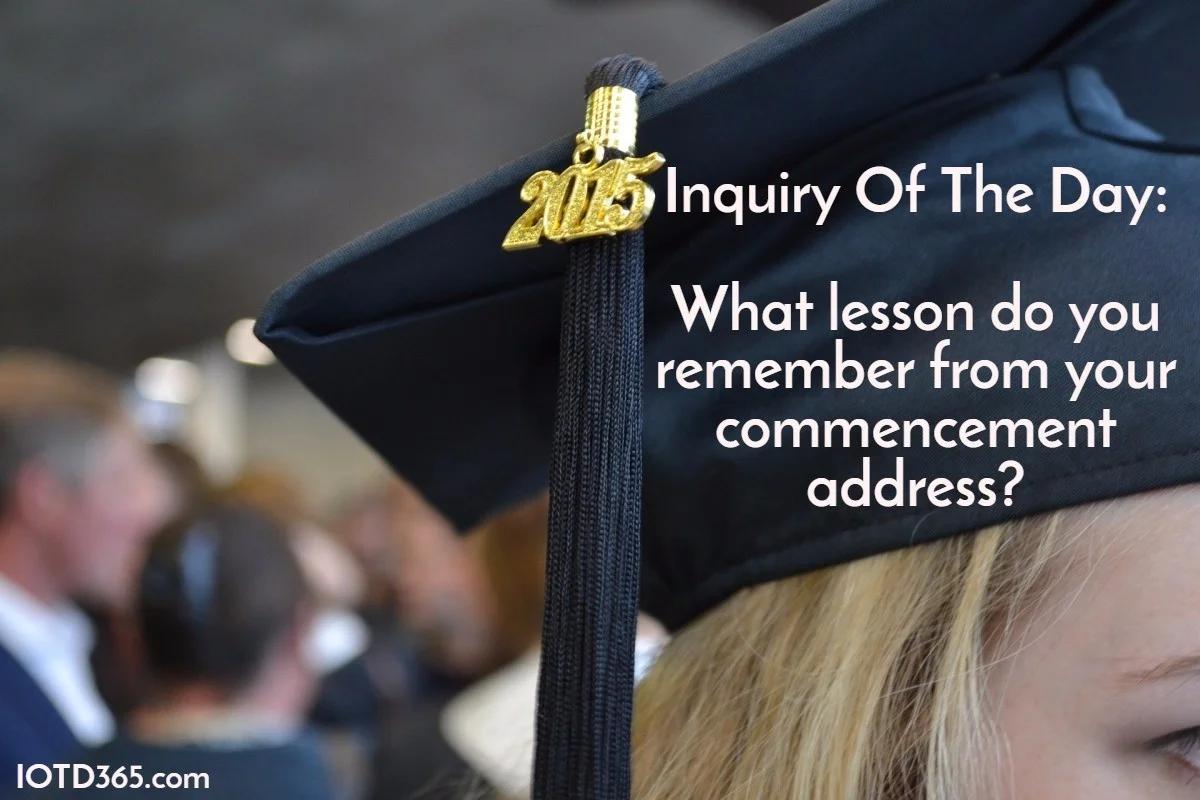
I would wager that either the joy of being done with your studies of the remnants of a hangover prevented you from remembering anything from your college commencement address. I am spending this weekend at a graduation for a family friend at Cornell University, in Ithaca New York, and just heard a convocation from actor James Franco, the Spiderman anti-hero, who has applied considerable effort to academic studies since initially dropping out of UCLA. Observing the controlled chaos of exhaustion from finals, preparing to move out of your dorm for a final time, saying good bye to friends and ensuring the family and friends attending are taken care of properly is enough to cause a minor heart attack. The highlight of your graduation was the key words of wisdom that were spoken from a specially selected person that could pass on words of wisdom to propel you into the future, but do you remember them? We have all seen Steve Jobs 2005 Stanford commencement speech. YouTube offer commencements by Neil Gaiman and Admiral William H. McRaven each offered amazing speeches worthy of your time. If words have meaning then these moments are worth capturing and gleaning at least one takeaway to carry with you. Building a monument and recognizing this rite of passage is important as a mile marker in your life and for those around you. This commentary has been focused on the college grad, however it applies to anyone that has heard a commencement. This topic has grown in importance to me as I have sat in the audience in recent years. Mr. Franco ended with the encouragement to be generous by finding ways to give back to the community. If you don't remember your commencement speech, you can borrow from the 2016 Cornell convocation by the Spiderman anti-hero and embrace the encouragement to live generously. 

Who have been your commencement speakers? Why were they chosen? What could you learn today from revisiting their statements? Have you applied any lessons learned? Were you impressed with anything that was said? What would you share at a commencement if asked?

Comment

What smell invokes a strong memory?

May 28, 2016

You can travel 15 years and 2000 miles with a mere sniff of the right aroma. It is late Spring in the Finger Lakes region of New York and the fragrance of honeysuckle is wafting through the air and takes me back to working in the yard of a dilapidated stone house in Connecticut 25 years ago. Moth balls trigger flashbacks of my Navy boot camp in 1988. The blooming lilac bushes near the restaurant deck overlooking Seneca lake, took me back to the 300 year old house we had in Connecticut. We had over 30 lilac bushes that were so abundant I would bless everyone I could with a huge bouquet each spring. Not all memories are pleasant. A friend was recounting his experience in the war and he is immediately transported across the world to a desert where he lost dear brothers in arms with just the wrong smell. Smell is one of the strongest senses we have and is closely tied to our memory. A sure fire way to make a memory stick is to add something that will utilize the sense of smell. What is it for you; chocolate chip cookies, bread baking or a musty smell that brings back memories of grandmas basement. The sense of smell is a sense that is often overlooked, but is one that is at our core. So make the most of what you have and go experiment, go out and smell the world around you.

What smells bring back pleasurable and painful memories? What smells do you intentionally avoid? What smell do you like that others don't? What kinds of memories to smells trigger; people, location, experience, feeling, images? How can you enhance your use of the sense of smell to make memories?

Comment
← Newer Posts Older Posts →
The Latest RSS

Latest & Greatest

Featured
Sep 14, 2018
The Home Of Inquiry Has Moved
Sep 14, 2018
Sep 14, 2018
Apr 30, 2017
How have cultural expectations shaped you?
Apr 30, 2017
Apr 30, 2017
Apr 23, 2017
How do you fast?
Apr 23, 2017
Apr 23, 2017
Apr 16, 2017
What are your family memories?
Apr 16, 2017
Apr 16, 2017
Apr 9, 2017
How are others showing love to you?
Apr 9, 2017
Apr 9, 2017
Apr 2, 2017
How do you know your commitment will last?
Apr 2, 2017
Apr 2, 2017
Mar 26, 2017
When do you expand your vocabulary?
Mar 26, 2017
Mar 26, 2017
Mar 19, 2017
How do you forage for positivity?
Mar 19, 2017
Mar 19, 2017
Mar 12, 2017
What are you encouraged about?
Mar 12, 2017
Mar 12, 2017
Mar 5, 2017
How can you use your constraints as an advantage?
Mar 5, 2017
Mar 5, 2017

Engage

These INQUIRIES are here for you.

My intention is for you to ask better questions and think deeper.

Our fast paced, always on, society provides little time for reflection. 

After answering the initial inquiry, dig a little deeper and follow-up with a bit more thinking:

What do I think about it?

How can I make it better/worse?

How does this influence my life and those around me?

How can I be more generous?

© Kenneth Woodward and Inquiry Of The Day (IOTD) 365 (IOTD365), 2016.

Unauthorized use and/or duplication of this material without express and written permission from this site’s author and/or owner is strictly prohibited. Excerpts and links may be used, provided that full and clear credit is given to Kenneth Woodward and IOTD365 with appropriate and specific direction to the original content. Give me a chance to say "Yes".

Powered by Squarespace