• Blog
  • Inquiry Archive
  • About
Menu

Inquiry Of The Day (IOTD)365

  • Blog
  • Inquiry Archive
  • About

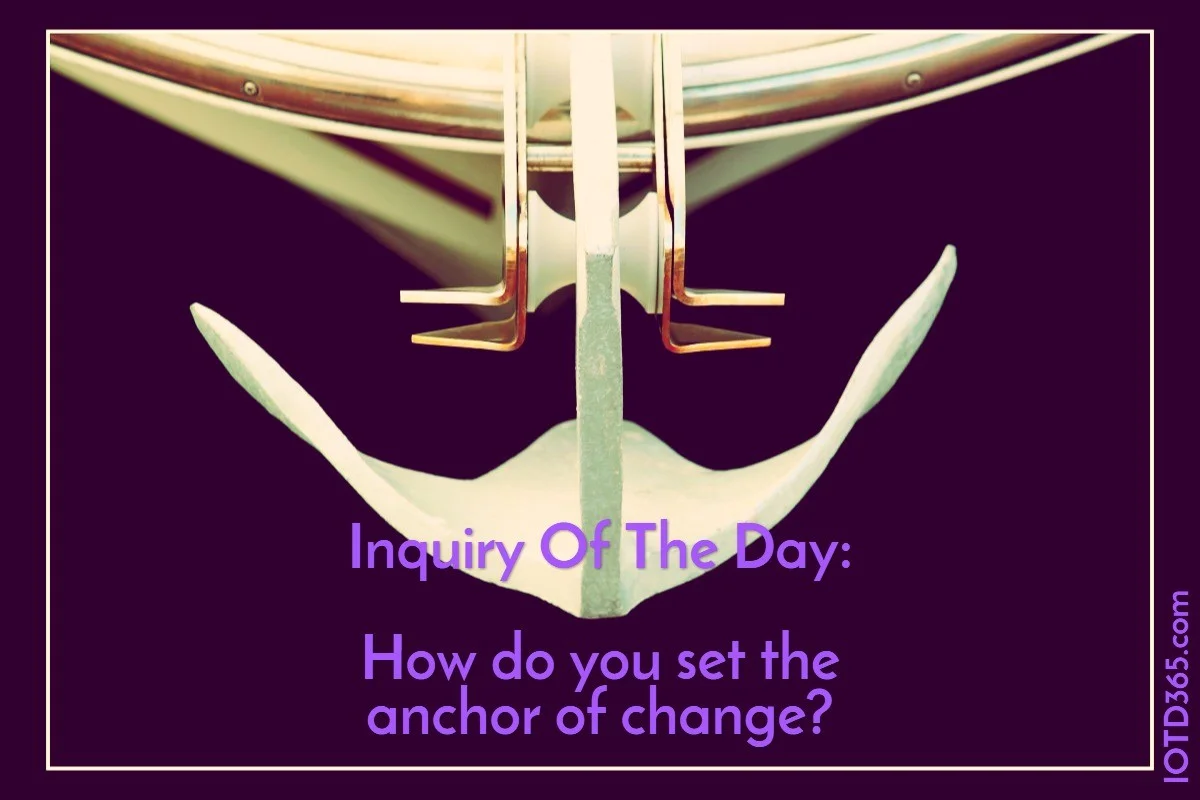
How do you set the anchor of change?

August 25, 2016

The ships anchor digs into the seabed to ensure the ship doesn't drift in the current. A captain knows her craft and knows what type of anchor to use in each type of seabed. If the wrong anchor is used, it will never hold fast to the bottom, and the ship will drift aimlessly into danger.

When our organizational or personal shortcomings are discovered, change is required. The magnitude of the revealed gap will influence the effort invested in change. As the captain of our ship, we assess the seabed and determine what anchor is appropriate to ensure safety. Is it the anchor of transparency, accountability, training, vulnerability or another option on board?

Loss of the holiday 10 pounds will use a different solution than if integrity with our customers has been broken. In the former, the anchor can drag a bit before digging into the sediment. The latter demands immediate and drastic action to right the ship and begin the process of rebuilding the customer's trust.

Accountability is my go to anchor for any hope of getting the change to hold fast. Continuous vulnerability during a review of metrics ensures the anchor does not slip. In the light of day, it is easy to look at the shore and notice movement. However, the starless nights hide the shore-based reference points. If the anchor doesn't hold, the dangerous reef awaits to pierce the hull.

Going Further: What methods have you tried to ensure change sticks? What is your go-to method? What option makes you most uncomfortable, why? What is a change that has held for a long time? 

Writing soundtrack: #awolnation #falloutboy
In Life Operating System Tags change, anchor, self awareness, growth
1 Comment

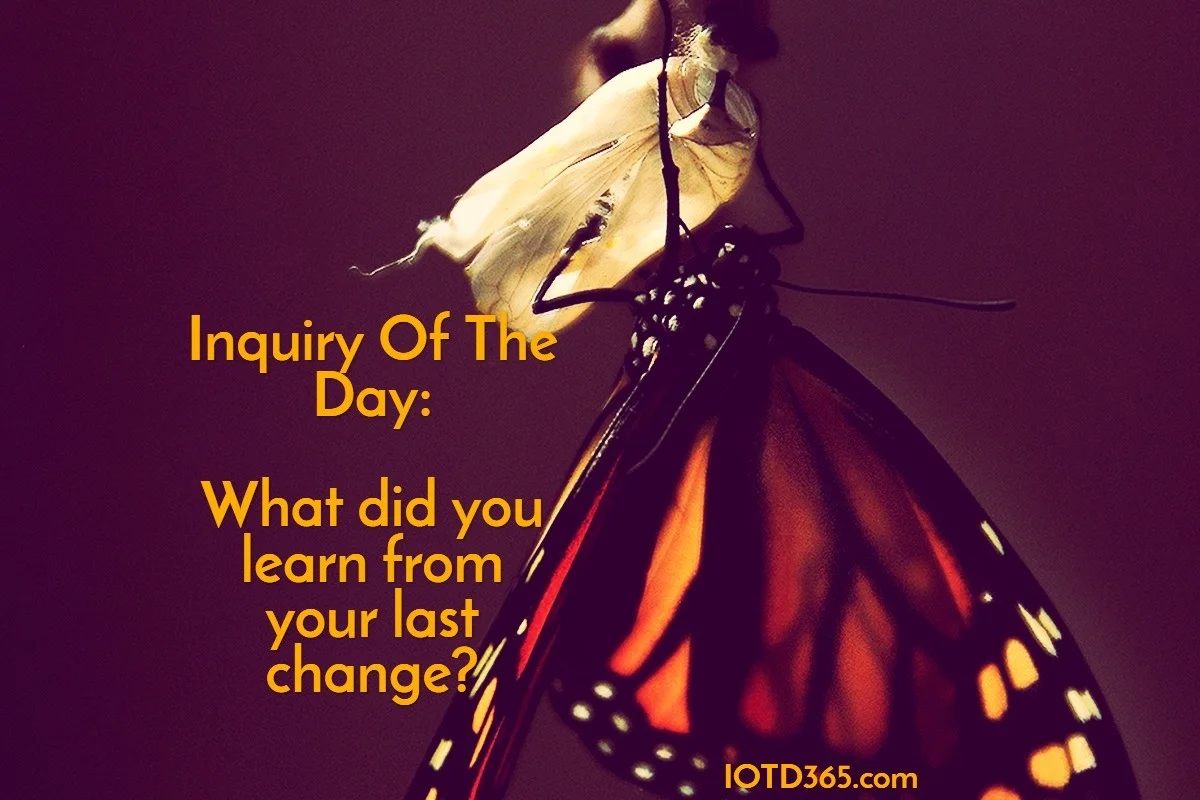
What did you learn from your last change?

August 24, 2016

A balloon fully inflated doesn't return to the original shape once deflated. I worked for an organization for several years. 18-months ago I left to do a rotation with another group and recently returned to the original team. This return home revealed I grew and changed during the rotation. My knowledge increased about the job, however, more importantly, due to extensive personal growth, I am not the same person that left. I would not have written this post for you before this transformation.

A common prayer is to ask God for change and growth without the challenge. Rarely is this prayer answered. I generally need to learn the lessons through a more round-about trajectory that includes building character. Some of us require remedial training before a lesson is learned. 

As you reflect on your last change, what do you identify as the lesson learned? This may run the gambit; the new software protocol can be learned, your significant other doesn't like the new paint color on the wall, the medications are too strong, you can live without pasta, or the exercise in class proved you do have artistic talent.

Much like how we act when no one is looking; change is a mechanism to reveal our integrity. Through a series of changes, you arrived at today. Without changes, tomorrow is the remake of the movie Groundhog Day, and you can't apply any lessons learned because that would constitute change. This evolution prevents stagnation and dying on the vine. Use change is a vehicle to deliver your desired tomorrow; get in and drive.

Going Further: Were you expecting to learn the lesson? What elements were easier and harder to learn? What mindset do you approach change with? Where do you hate change and why? What is at the root of this resistance to change?

Writing soundtrack @majorlazer @bluefoundationofficial @thescriptofficial 

Comment

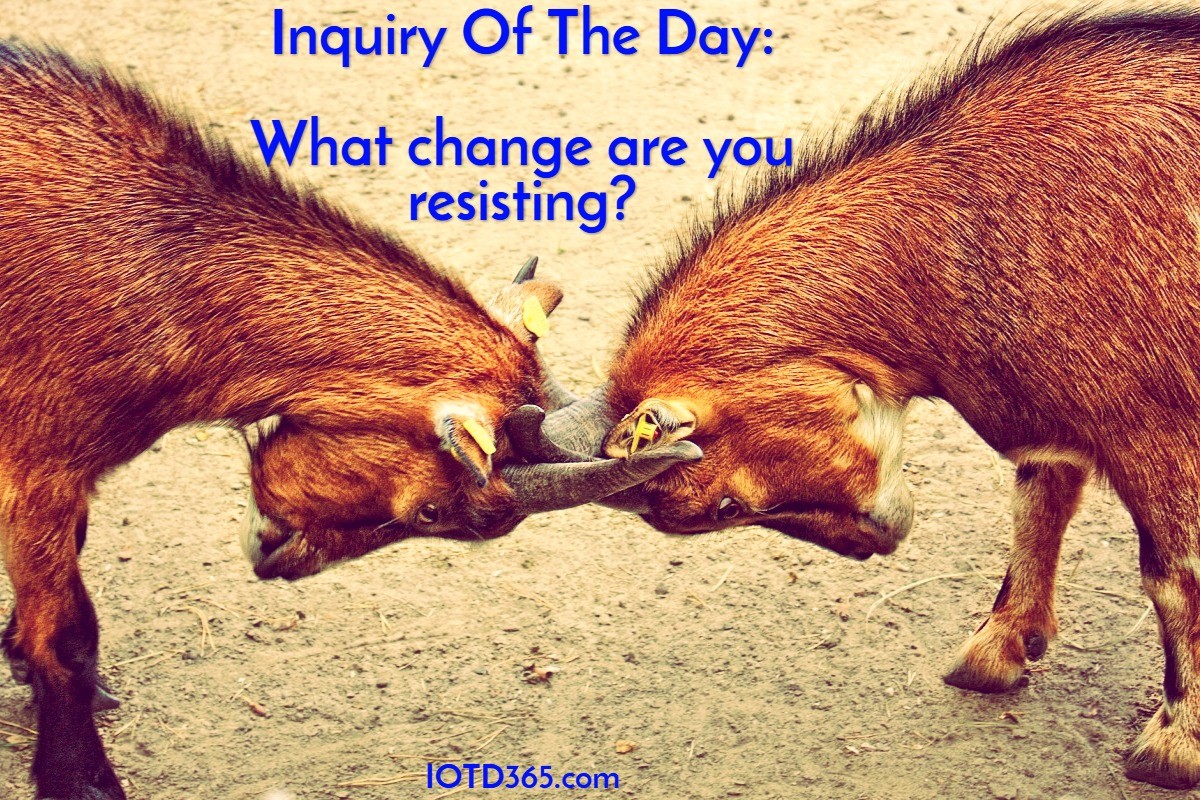
What change are you resisting?

August 23, 2016

We are creatures of habit and resist change. However, this resistance is not across the board. There are categories we embrace change on the leading edge and other areas we are dragged, kicking and screaming across the finish line. The entire change management industry seeks to help usher us through the process of adoption of the future state. 

R. Buckminster Fuller introduced the Knowledge Doubling Curve in his 1982 book, Critical Path. The rate at which human knowledge doubles continues to shrink. In 1982, the doubling was happening about every 18 months and today, we are at the 12-month mark. Whether you like it or not, the winds of change are coming faster and faster. The Internet of Things will just pour fuel on the fire. 

Becoming self-aware of your personal process of integrating change into your life will only help you as each passing day will demand a more nimble mindset.

Going Further: What came to mind when you read today's inquiry? Did something jump to the forefront of your mind? How are you going to handle this pending change? What information do you need to make a decision to remain firm for the long-haul or accept the change today? What is the impact on personal and business relationships of your decision? What is your primary sticking point and is there something that can be negotiated to move forward? What is the best and worst case of holding your position? 

In Life Operating System Tags change, R. Buckminster Fuller, knowledge doubling curve, critical path, self awareness
Comment

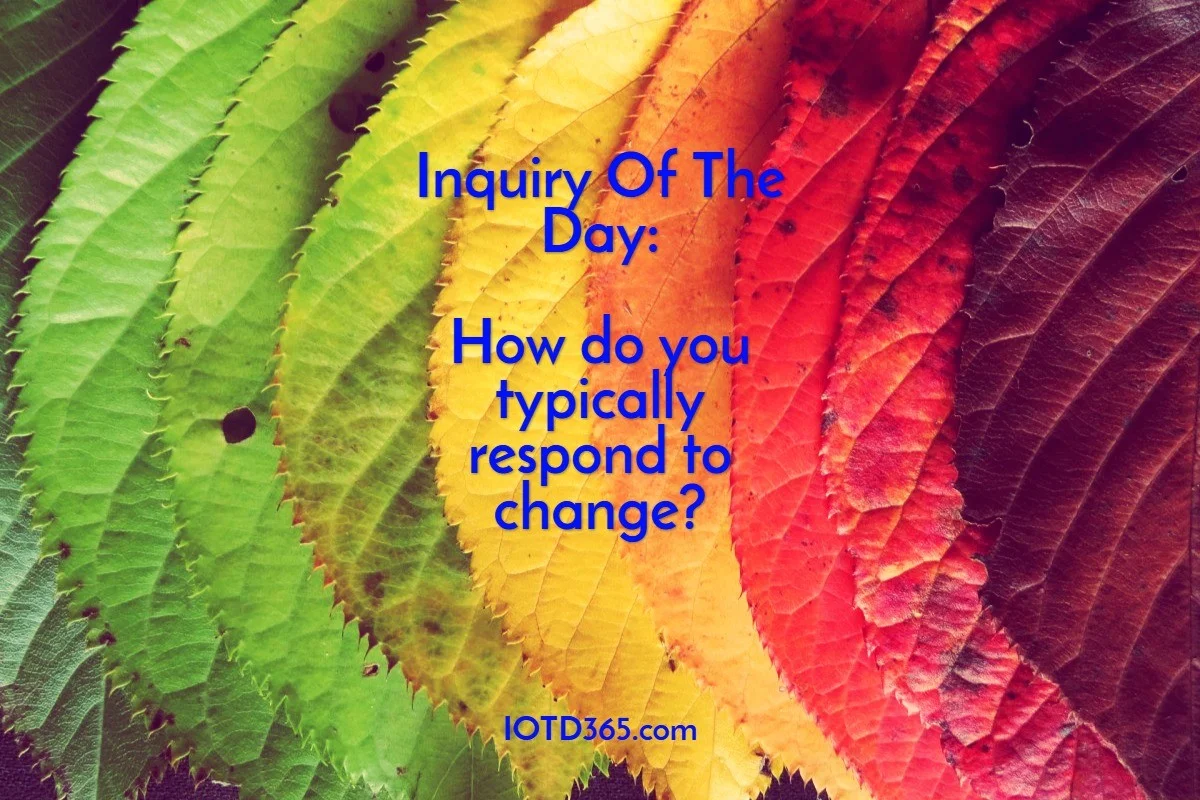
How do you typically respond to change?

August 23, 2016

Constant change is here to stay. Every day the Grand Canyon erodes just a bit more, the tides shift on social and political issues, the new phone gets a day closer to replacement, and relationships continue to morph. Sometimes we are tracking the change to celebrate, and other times change sneaks up and yells "Surprise!" 

How do you usually respond to the swirl of uncertainty as the galaxies continue to expand? This inquiry provides a study in self-awareness. Do you resist change like a stone walkway; buckling and breaking when the ground heaves or is your response more pliable and willing to absorb the shock of an ever-changing world?

Yesterday, I dropped my daughter off at college after a very deliberate process to get her into the right school. Today, I learned my auto mechanic, the guy I have trusted for 18 years, is no longer managing my local shop. While not emotionally equal, this is a real-time change and a reminder that life is in motion.

For you, what are the real-time changes you are encountering today? It may be a monumental shift or just another step in the long line of subtle daily changes. The transformation may be another day of school closer to graduation or a day closer to retirement. In either case, bystanders will reflect on the significant milestone and how each day added up, to equal a day of celebration.

You and I shape what tomorrow brings through our actions and preparations today. Knowing tomorrow will be different can encourage our souls and help soften the rough edges of the new normal. Embracing inevitable change starts from the neck up and is a daily choice. Your fresh start happens when the rooster crows.

Comment

What is a bittersweet memory?

August 22, 2016

My most recent bittersweet memory was today. I dropped my youngest daughter off at college in Texas today. A mere 1,377 miles or a short plane ride from Maryland separates our family reunion. The trip has been exhausting, but getting her room set up just so, was fulfilling. The opportunities she is embracing will set her up with an excellent education and industry contacts in her chosen field. As her father that expects her to be an adult far longer than she has been a child. The growth and changes are still bittersweet.

It seems a tinge of gray can be found in good news, and at least a trace of silver can be found in the clouds seemingly terrible situations. This lack of absolutes offers hope in the dark days, knowing there is a touch of silver or if you just get a bit higher above the clouds, the sun is always shining. 

In Life Operating System Tags relationships, memories
Comment

What is a favorite story of your family's history?

August 21, 2016

An Uncle threw a pitchfork at my dad to scare him a bit, and it worked. The fork tines pierced his shoe and went right between his toes. Nor permanent damage other than a holy shoe and a story for the grandchildren. As a child, my industrious mom raised tarantulas to sell to the pet store to make some spending cash. 

Family stories are fun to hear and provide some color to the yellowed black and white photos that emerge every couple of years when a distant relative dies. Retelling the family history is a way to remind the current generations of their heritage and provide a sense of belonging and something greater than just the here and now. 

Sitting at the feet of an older generation provides insight into what the world was like many years ago. The greater the difference in age, the greater chance for a bridge to be built from the past to the future. These times of remembrance also provide an opportunity for family relationships to grow stronger. None of our histories are flawless, and there are always stories that are quietly whispered due to the magnitude of the wrong someone committed.

Who would turn down a chance to laugh, cry, be inspired and horrified all during a stroll down memory lane? We can be grateful to those that catalog these family histories, drawing out the older generations about how it was possible to exist before a Google or cell phone.

In Life Operating System Tags relationships, family, history
1 Comment

When did you last ask; how can I serve you?

August 19, 2016

Our words can mean everything or mean nothing. The receiver determines the weight and validity of what is said. Each interaction is another opportunity to tip the scales for our words to be highly valued.

Cultivating our relationships must have the same attention of our 401K. If wise investments are made, the money can fade, but the relationships remain. Rarely does someone want stacks of cash surrounding the deathbed, but friends, family, and co-workers are highly prized.

Let's not assume we know best, but humbly come and ask; 

What do you need from me and how can I serve you?

In Inspiration Tags relationships, words, service, humility
Comment

How do you seek out bad news?

August 18, 2016

Our teams want us to be the leaders we read about in the books on our nightstand. Courageous enough to challenge the bureaucracy, willing to lead at the pointy end of the spear, and prove that we are all in this together. A leadership maxim is to share bad news early since it never ages well. This is a great statement for the employee manual, but are you sincere?

It is tough to hear the barrage of what is wrong. We either seek it out from those closest to us or wait for it to show up in the news. How you spend your time reveals your priorities. How much time do you spend asking the hard questions to expose the bad news?

Does your team believe bad news is welcomed, and something will be done, or is it easier to just smile and wave? The silent majority of team members will keep their opinions close to the chest for fear of reprisal unless we are intentional to draw them out. How many "whys" are needed before you surface legitimate concerns during your daily walkabouts with the team?

Today, we choose what kind of team to lead. One that is characterized by charging forward with gracious transparency or hunkering down in a protective defense of the status quo. Each day, this unique team is investing their precious lives to achieve a common mission, and the opportunity is missed if their observations and insights are ignored. Feedback is a gift, and if improperly handled, it is squandered. The team deserves better from us, and we must deliver.

Going Further: How are you building a culture that is free to share bad news early? What bad news surprised you? How has this freedom influenced the team and helped the end customer? What is your process for collecting candid feedback? What action have you taken as a result? What culture needs to change? What can you do today to start required changes?

In Life Operating System Tags relationships, bad news, culture, leadership, leader, courage
Comment

How do you develop trust?

August 17, 2016

You are probably a bigger risk taker than you realized. To pursue trust is to risk compromise. In the book Give and Take, author Adam Grant, states that "we struggle mightily when guessing who's a genuine giver." We want to trust a giver and not a taker because we don't want to get taken. Since you are reading this, you have lived long enough to discover that some people are not looking out for your best interest and don't deserve your trust. Welcome to the human condition; now what do you do with this experience?

I lean toward trusting and perhaps, a bit too quick. This tendency has provided plenty of opportunities to refine my judgment. My discernment is still not properly calibrated. My wife cringes if a sales guy shows up at the door. As a result, if you have anything to sell, stop by my other home and give your best pitch to whoever answers the door; the address is 1600 Pennsylvania Avenue, Washington, DC 20500. You can't miss it.

What is the gauntlet you require a new contact to run, before extending trust? Our requirements may be different for new additions to our family, work, and play networks. Who we let into the inner circle can be complicated, and we don't hand out manuals to new friends to provide guidance. Common denominators include the long time it takes to build trust and mere seconds to destroy it. It is through referrals that we transfer the trust of the original relationship to the new relationship. If the referred doesn't deliver, we tend not to hold it against our reliable source, the first time. If it continues, cracks form in the initial relationship and damage control is required.

Going Further: What is your process when you want to build trust? How do you go on the offense when you start a relationship on the way to building trust? How does this change for each of your relational networks? When did extending trust early work out for you? How has your willingness to trust evolved over the years? How has your discernment improved?

In the interest of building trust; the address above is not mine.

In Life Operating System Tags relationships, trust, Give and Take, Adam Grant
Comment

When do you default to critical judgments?

August 16, 2016

No one can live up to the scrutiny of perfection. What is the posture of your mindset as you engage your relationships for discussion? A charitable judgment is believing the best of a situation until the facts have been gathered. A critical judgment believes the worst until proven otherwise. 

Little Johnny comes home from school with a black eye emerging on his cheekbone. A recently promoted sales rep is evasive about reporting her numbers to you. The home improvement contractor leaves a message that he needs to talk. Where does your mind go first? Johnny is fighting again; the sales rep can't make quota; and the contractor is about to confirm your worst fears.

Our response may be consistent with everyone, or it may be relationship dependent. The history of hurts, wrongs, and disappointments will influence how we approach each situation. Our going in mindset impacts our physiology and engages our fight or flight response as we brace for the worst. 

We are far better having a clear mind with steady emotions to hear the news vice amped up on cortisol and ready to attack. The skills to listen well and be empathetic, creative, and curious to navigate the bad news will not be primed to respond in a generous manner. 

I have struggled with critical judgments when report cards are brought home. The end of a marking period, should be a time to engage with my kids and celebrate the accomplishments vice berating the lowest grade. It would take a mature child to say "Gee Dad, I see your concern. I would love to get your input about how I can turn this around, and I am all ears". Would you respond the same way to your boss if objectives were missed?

Let's establish a new standard of charitable judgments and believe the best of others. If you are wrong, you will find out in mere minutes and rarely will 60 seconds make or break the situation. It is your decision; what do you choose?

Going Further: What are charitable judgments you can imagine for Little Johnny, the sales rep, and the contractor? What is the basis for your critical judgments? How would leading with a charitable judgment change your conversations? How would approaching with charitable judgments impact employee relationships during performance evaluations? 

In Life Operating System Tags relationships, judgments, critical, charitable
Comment

Whose cornerstone are you?

August 15, 2016

This is the one time it is good to be called a rock. The cornerstone is a primary stone at the base of two walls that is essential to building construction and sets the foundation of the building.  

Relationships are a give and take. We cannot be all things to everyone, but we can play a critical role to a few as their cornerstone. We must expect to fulfill this function for those nearest to us in our circle of relations in some capacity.

Does your network look to you as the stoic rock that is not shaken in times of uncertainty, the one that can be counted on to bring a laugh at just the right moment, or the one that can provide a practical blessing at a time of need? 

A building is a structure that serves a purpose, just as our relationships serve a purpose. They won't last 136 years, but they will last for a time. Healthy relationships will acknowledge how each member can be depended upon to bear the weight of the friendship, love, care and dependence. Interlocking stones can build a robust structure to memorialize the relationship and what it accomplished.

Your presence as a cornerstone matters and is vital to the beauty of the construction. Don't discount the impact of one stone.

Going Further: Who are your cornerstones? How have these cornerstones influenced your life? How have they changed over the years? What cornerstone was a surprise? Who is depending on you for too much? What ways can you serve in a greater capacity?

In Inspiration Tags relationships, cornerstone
Comment

How do you experience love?

August 14, 2016

Fella's back off!
No, your significant other didn't pay me to ask this inquiry. I figured I would make you nervous all on my own and besides, Valentines Day is a long way off. Stop the Google search for flowers or chocolates; this question is really about each of us individually. Author Gary Chapman provided a framework when he listed his five love languages as words of affirmation, acts of service, receiving gifts, quality time and physical touch. Perhaps you may need to shoehorn your preference into one of these categories, or you have another, but self-awareness is the key.

If you are convinced that this doesn't apply, then I believe you will lie about other things as well. I may be sexy, but I ain't stupid. There is a chance your true self, has been cauterized by life and your need to relearn who you are. Perhaps a strong personality, growing up, convinced you that you were wrong, and you didn't experience love expressed in a way you could understand. Your preference is not isolated to romantic love, nor is it is not too late to recognize who you are.

The beautiful couple on the silver screen or the perfect family on the small screen established the model of love for many. This model was easy to try on, make our own and never realize the fit was wrong. Our relationships may express love to us in the manner they receive love and unintentionally miss the mark for you and me. Discovering and sharing this preference demands courage and vulnerability. Graciously reminding those in our lives of this fact can transform our romantic, family, friendships and work relationships. Our eyes are opened to see things we previously missed. Be brave and get to know yourself, it will change your life.

Going Further: What are your primary and secondary ways of experiencing love? How long have your close relationships known this about you? Who expresses love for you in a way you receive? What were your relationship models? How have you applied this knowledge and how did it impact your relationships?

In Life Operating System Tags love, Gary Chapman, love languages, relationships, brave, vulnerability
Comment

What sparked your passion?

August 13, 2016

Jump in the way-back machine and tell your passion origin story. Everything has a beginning, middle and end. It is worthwhile to review to see how we have arrived at today. Influences, coincidences, divine appointments or twists of fate brought you to the point of finding this cause where you seek to achieve change to you and the world.

I wanted to bring something unique to the world following a reawakening over the past 18 months. My response is taking the form of curiosity, inquiry and writing. With the constant barrage of talking heads giving all the answers, I thought it was time to ask different questions. These inquiries are intended to prompt discovery and self-awareness for those that choose to engage. Most will not spend the time to answer nor dwell with the question. My journey had taken years before I was willing to look for deeper questions and prepared to respond with something other than memes. I haven't arrived, but this was my spark.

Your turn.

Going Further: Who inspired your passion? What frustrated you about the status quo? What gave you the courage to step forward? Who has come alongside to support you? What does success look like as you invest in your passion? What question was missed?

YouTube Video: What sparked your passion?


In Inspiration Tags passion, origin story, change, curiosity, writing, action, inspiration
Comment

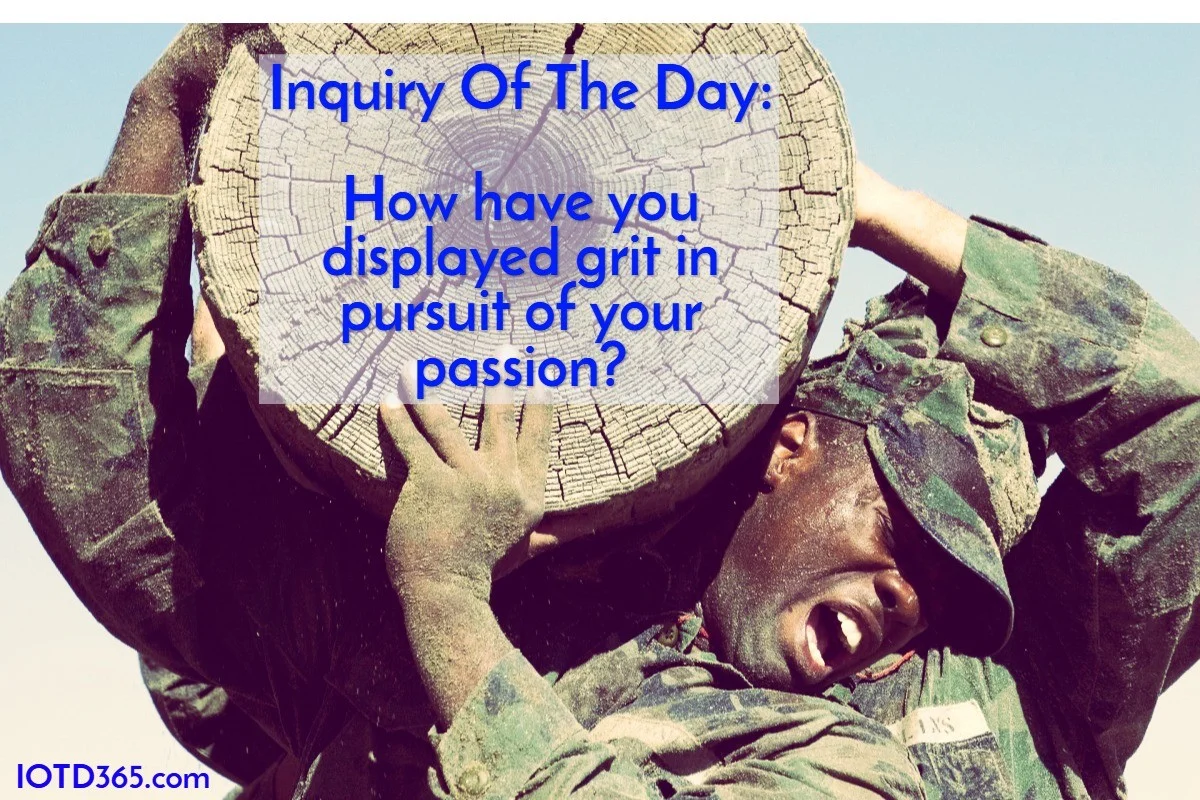
How have you displayed grit in pursuit of your passion?

August 12, 2016

The Merriam-Webster definition of grit is the "firmness of mind or spirit: unyielding courage in the face of hardship or danger." Not the definition of a friend used to describe his dissatisfaction of a contemporary as "the grit in the gears of progress." Your personal definition has probably matured over the years as you think beyond cramming for a school final.

We don't run from bears and saber-toothed tigers, so our biggest challenges are self-imposed. We claim to do hard things by skipping a meal and at the first temptation the donut gets dropped into the face trap. Skipping a meal is a daily occurrence for much of the world, and it is hard to justify this as grit. The second element is thriving in these conditions for a sustained period. It is clear that long-suffering is a component of grit and runs counter-culture to our give-it-to-me-now, always-on society.

The perseverance to stick it through to the end is critical when the project is necessary. Each minute of your life is invaluable, and your passions demand your time and effort to make the dream a reality. Pursuing your first muscle-up, achieving a deadlift personal record or helping struggling kids, over years, place well on college entrance exams, require grit to submit the final product and await a verdict. Pushing through the brain fog to produce good work, despite the long nights and little sleep produce grit.

What is your history with grit? How does this inquiry challenge you and encourage you? What challenge did made you appreciate grit? Who is your real-life example of grit?

YouTube: How have you displayed grit in pursuit of your passion?

In Life Operating System Tags passion, grit, long-suffering, perserverance
Comment

What data are you ignoring?

August 11, 2016

The truth can hurt and reading the data can sting, but as writer Joseph Campbell stated, if you are falling....dive. I recently heard this quote and loved the perspective and truth. The passions we pursue are worthy of getting right and rarely will we nail it the first time. We need to look at the data and adjust. Everything is continually changing; either growing or decaying. We must embrace the change, fight decay and foster growth.

My tendency is to charge ahead with what I believe is the right answer, based on feelings and because I want it to be so. Data is an emotionless friend that presents the facts, sits back with a blank stare, and awaits a response. The trick is to ensure you are gathering the right metrics, so this friend reveals the good data points. Spend time noodling through the results to ensure the analytics are understood. Then decisions can be made and action taken.

The passions scream, keep pressing forward, look at all I have invested in getting this far. The brother has been convinced from the start that you are crazy. The emotions get tossed back and forth based on the ebb and flow of likes or followers. The fans applaud the silver lining of the trials. The data quietly sits by waiting to be asked, then states, either pivot or continue the dive. The data is the calm voice among the noise, and there is no need to fear this loyal friend. 

It may be time to run a query on the database with just the right questions then take your friend out for a coffee. Read what the data says. For some, the evidence says it is time to move on to the next dream on the list; this one is heading nowhere. For others, the data says there is more for you to learn and grow through this passionate pursuit, now is the time for you to double-down and run hard. You can't tell your friend what to say; you can only listen then make a decision. 

Going Further: What data points are you tracking? What data points do you dislike? How do emotions rule your decision-making process? What data point is it time to heed?

In Life Operating System Tags passion, Joseph Campbell, data, metrics
Comment
← Newer Posts Older Posts →
The Latest RSS

Latest & Greatest

Featured
Sep 14, 2018
The Home Of Inquiry Has Moved
Sep 14, 2018
Sep 14, 2018
Apr 30, 2017
How have cultural expectations shaped you?
Apr 30, 2017
Apr 30, 2017
Apr 23, 2017
How do you fast?
Apr 23, 2017
Apr 23, 2017
Apr 16, 2017
What are your family memories?
Apr 16, 2017
Apr 16, 2017
Apr 9, 2017
How are others showing love to you?
Apr 9, 2017
Apr 9, 2017
Apr 2, 2017
How do you know your commitment will last?
Apr 2, 2017
Apr 2, 2017
Mar 26, 2017
When do you expand your vocabulary?
Mar 26, 2017
Mar 26, 2017
Mar 19, 2017
How do you forage for positivity?
Mar 19, 2017
Mar 19, 2017
Mar 12, 2017
What are you encouraged about?
Mar 12, 2017
Mar 12, 2017
Mar 5, 2017
How can you use your constraints as an advantage?
Mar 5, 2017
Mar 5, 2017

Engage

These INQUIRIES are here for you.

My intention is for you to ask better questions and think deeper.

Our fast paced, always on, society provides little time for reflection. 

After answering the initial inquiry, dig a little deeper and follow-up with a bit more thinking:

What do I think about it?

How can I make it better/worse?

How does this influence my life and those around me?

How can I be more generous?

© Kenneth Woodward and Inquiry Of The Day (IOTD) 365 (IOTD365), 2016.

Unauthorized use and/or duplication of this material without express and written permission from this site’s author and/or owner is strictly prohibited. Excerpts and links may be used, provided that full and clear credit is given to Kenneth Woodward and IOTD365 with appropriate and specific direction to the original content. Give me a chance to say "Yes".

Powered by Squarespace