• Blog
  • Inquiry Archive
  • About
Menu

Inquiry Of The Day (IOTD)365

  • Blog
  • Inquiry Archive
  • About

How are you generous to your teachers?

August 1, 2016

Darrell Brooks sang, with his red guitar, tucked in the corner of the sandwich shop during the lunchtime rush. The steady flow of lunch customers bustled past him in their return to the office. Every once in a while, a dollar or two would drop into his tip bowl. Darrell continued to sing a string of great covers, regardless of what fell in the bowl.

I usually seek to negotiate the best price that I can for my latest purchase. I ask for the greatest discount or scouring the web for a coupon code to knock the price lower and may have even burned a CD or two over the years. Amanda Palmer's book, The Art of Asking, challenged me regarding compensating artists for delivery of their daring work.

As I watched Mr. Brooks and heard him sing, I learned something from across the room. Truly appreciating the artist, drove my desire to compensate Mr. Brooks in exchange for his creative efforts. This singer, with the red guitar, delivered the beauty of a well-covered song to a lunchtime crowd and taught me a lesson that was long overdue. The artist earns the generosity of fans by shipping creative work.

With extreme gratitude, I emptied the contents of my pockets for the schooling. $13.65 for a life lesson is an excellent deal. Ms. Palmer prepared me to hear the lesson and today; Mr. Brooks was my soulful teacher.

We have arrived at today through the tireless efforts of a host of others that have taught us about life. Some teachers were good and others poor, but lessons were learned either way. Taking the opportunity to extend generosity to those that initiated the virtue, can take many forms and is well worth the effort. These teachers are not expecting you, and your news is the best kind of surprise.

Thank-you Mr. Brooks.

Going Further: How have you been generous to those that have invested in you? Who is still waiting? What has been the outcome of expressing generous gratitude previously? What other questions come to mind regarding your teachers?

In Life Operating System Tags generous, teachers, Darrell Brooks, Amanda Palmer, The Art Of Asking, gratitude, thankfulness
Comment

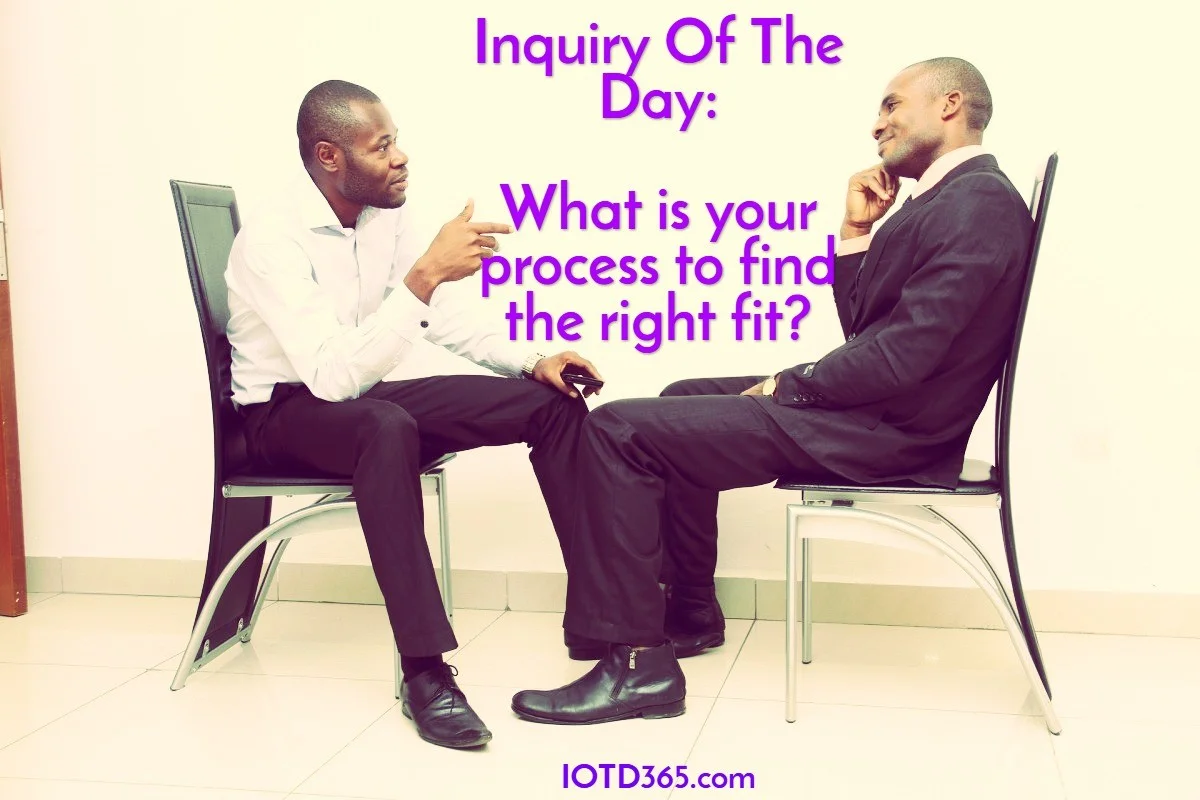
What is your process to find the right fit?

July 29, 2016

The electronic stack of resumes arrive in the inbox ready for your perusal and is generally best paired with an adult beverage. After fighting upper management to defend the budget and fund your new hire; the tough slog of finding the right match ensues. TaskRabbit founder, Leah Busque, stated "hiring's tough. The difficult thing is the nagging feeling that, despite your best efforts, the perfect candidate will somehow fall through the cracks."

The replacement cost is targeted between 16-20% of the annual salary and is a pricey endeavor in time and resources. After all the work, there is still the chance that after a couple of months you find your hiring system and gut instinct was wrong and the new hire isn't the right match. Having been on both sides of the interview, asking the right questions to ensure there is alignment between the hopeful new hire and the prospective company is critical.

If you have been in the game any amount of time, you have refined your skill at determining the best candidate for the position. I am now far more at peace arriving at an interview with a boatload of questions to ensure expectations are understood than when I wore a younger man's clothes. The hiring decision is an opportunity to propel or disrupt the entire team. Beyond finding capable hands to accomplish the work, you are influencing the organizational culture with each new personality. Your current team and customers are counting on you to use your process to correctly discern who to offer a handshake and offer letter; choose wisely.

How much does your gut instinct play a role in hiring a candidate? What are the key "tells" that a candidate is the right or wrong fit? Who were your best/worst hires and what lessons did you learn that you now apply? How has your process changed? What innovative and creative processes do you use to really know the candidate? What are your hiring blind spots that may allow the wrong person to be hired?

In Life Operating System Tags leadership, Leah Busque, TaskRabbit, interview, questions, hiring
Comment

How do you empower your team?

July 28, 2016

Sergeant Major Alford McMichael was the most senior enlisted Marine from 1999 to 2003, serving as the fourteenth Sergeant Major of the Marine Corps. In his book, Leadership, he writes, "one of the most fundamental aspects of effective leadership is leveraging power by distributing it among your people". The necessity to teach and train your people to take initiative is on your shoulders as a leader. You will restrict your growth potential if every decision must be cleared through one choke point.

Your hiring process includes finding the best and the brightest to help execute the vision and mission of the organization. If top talent is brought onboard and not given the chance to exercise their capabilities then everyone loses. A lever is a powerful tool that can move mountains and properly enabled your team can achieve the impossible. Giving the authority to make decisions and impact the end user at the lowest level places the lever in the hands that can influence the greatest change. This freedom provides the quickest response to the customer and a sense of ownership for those working the process.

No doubt, you have experienced the micro-managing organization at some point in your life and encountered the stifling effects that ripple through the organization. Controlling all elements of the activity feels safe, but is safe really the goal if it hamstrings the organization for fear of something going wrong? The reality is that things will go wrong, the difference is the strong army of dedicated and empowered people that are invested and want the achieve the vision vs, the cogs punching the clock because of a lack of ownership. Vibrant health or a safe death, the choice is in your hands.

Going Further: What do you think and feel about relinquishing control and driving authority deeper into the team? When have you seen it work well? How has this process failed and why did it fail? How do you evaluate the effectiveness of empowering your team? Who is someone you can enlist to help enact needed changes? What is one element of authority you can empower a team member this week?

In Life Operating System Tags leadership, Alford McMichael, empower you team, control, empower, ownership, leveraging power
Comment

How do you lead by example?

July 27, 2016

Your kids hear what you say, but remember what you do. This was sober advice given to me as a young parent and has proven to be true. Maybe a bit of what I said stuck, but the overwhelming ratio of remembered lessons for my kids favors my actions. This principle is consistent throughout the business world and any other leadership sphere. Kids are pretty good at calling us out on the inconsistency between what we say and what we do. Others may not be as vocal because a job promotion may be on the line, but our hypocrisy will be discussed at the water cooler or the lunch-line.

If the boss says that it is important to have a work-life balance to maintain employee health and spends the weekend sending out email and making calls, she will loose credibility with the staff. Eventually, the organizational morale starts a downward spiral and requires a targeted effort to recover what was lost. Retired Army General Norman Schwarzkopf stated "Leadership is a potent combination of strategy and character. But if you must be without one, be without the strategy." Your character is revealed through the consistency of your words and actions. Be intentional, the world is watching.

Going Further: Where is your example inconsistent with your words? What standards do you hold for others, but not yourself? What changes need to be made to bring words and actions into alignment? What were the results of making these hard changes previously? 

In Life Operating System Tags leadership, action, hipocrisy, Norman Schwarzkopf, character, strategy, example, change
1 Comment

When have you led well?

July 26, 2016

I am Frodo; I approach this inquiry as a fellow traveler, seeking to grow in my abilities. I have been in the trenches as a worker-bee and middle manager, having experienced leadership on each end of the good/bad spectrum. I have in-turn provided a spectrum to the teams I have led. Having completed some self-awareness work along my journey, I am far more aware of shortcomings than successes. This can be par for the course for a recovering perfectionist. To read how to do it all perfectly, the Amazon business section is chock-a-block of the latest leadership insights.

Take the opportunity to pause and reflect on those times when you led like you intended. You know, living the life your dog believes you live; a hero to the world. We will often skip the celebration, thinking that is for those other people and miss the chance to catalog our strengths. These pauses allow for insight into our talents and leadership styles.

Journalist, Sebastion Junger discusses how the American Indian tribes would choose their leaders based on the environment. They understood that the same leaders are not perfect for all circumstances. A reigning peace-time chief would step aside if the tribe went to war and when the fighting was complete, the war-time chief would relinquish power to a peace-time chief.

This insight may provide great encouragement as you determine where your leadership strengths exist and how they can be employed within an organization. I always wanted to believe that I was the special snowflake that was a great leader in all circumstances. This is not the case.

Insulting a contemporary, Winston Churchill stated, he is "a humble man, who has much to be modest about". This quote helps to keep me grounded and recognize that each of us has a set of strengths that need to be used just like any other specific tool in the tool belt. This realization was liberating as I was viewing leadership as an all or nothing situation. I was wrong. 

What are your leadership strengths? What was a leadership win? What historical leaders are you most alike? What successes surprised you? How do you invest in developing your leadership skills?

In Life Operating System Tags Frodo, leadership, encouragement, leader, Sebastion Junger, Winston Churchill, humility
Comment

What is your leadership metric?

July 25, 2016

There are many ways to measure success; how do you know you are successful as you lead your family, Cub Scout troop or Fortune 100 company? Lord Kelvin stated, "when you can measure what you are speaking about, and express it in numbers, you know something about it." Each leader has a style where they are comfortable and have found success. Most often, it will be borne out of personality and experience of what they have seen works. Some experiences will provide negative training, and the leader will commit to running their organization directly opposite of their experience. Paying attention to the numbers can help understand your leadership effectiveness.

A friend was discussing his job transition into a new field and took a significant pay cut to right-size his work/life balance. His last company would grind through managers at a rate of three per year after demanding 100 hour weeks at the job and sparse vacation days. The union labor force was competent and stable, allowing for managers to be overworked, quit when exhausted and quickly replaced. Leadership had determined that these managers were expendable for the short-term gains. I mentioned that even with the pay cut, his hourly rate probably skyrocketed due to the normalized hours at the new job where he was finding great satisfaction.

As a leader of people, your responsibility goes beyond the easy metric of units produced, dollars collected and the least amount of time spent with each customer. Your investment in those you lead will pay dividends beyond the basic spreadsheet. Like any investment, you want to understand your returns. Lord Kelvin's statement reminds us that once we can quantify what is important then we "know something about it"; so, what do you know about your people? 

Going Further: Other than required company metrics, what do you use? How do you track the success of those you have led? How do you know that you are not a negative learning experience for your people? What else should be asked?

In Life Operating System Tags leadership, Lord Kelvin, metric
Comment

How do you lead?

July 24, 2016

You lead, but are you doing it well? The question quickly expands to whether you are intentional or abdicating the responsibility that is in your hands. Leadership is needed in all areas of society; the pick-up game on the middle-school playground, the fight for rights, the race for the White House, the midnight shift manager at McDonald's, the parent raising kids or the leader of an elite team of Marines. Many are groomed for stepping into the role and others find the responsibility thrust upon them at a critical moment. Leaders receive and ever shrinking honeymoon period to deliver direction and become the required leader.

Leadership is not about a personality or charisma, but rising to the occasion and caring for those in your charge to accomplish the mission set before you. Bookstore shelves sag under the weight of volumes filled with lists of how-tos and endless week-long seminars to help close knowledge gaps are offered through pop-up ads. Successful leaders recognize they are not all knowing in all areas and perfect in all disciplines. They will surround themselves with the strengths of others, knowing they have gaps and can't do everything on their own. My history includes abdication in personal, social and work leadership settings. Recollection of these missed opportunities has fueled greater intensity to ensure I am self-aware and growing to ensure the mission is achieved in the various settings.

The pantheon of past and current leaders you desire to emulate had a starting point and grew into the hero's you respect today. Before those trailblazers, of the past, closed their eyes in death, they would concede they could not have projected their lives, every twist, and turn. These leaders took the risk and chose to make deliberate decisions and take deliberate actions, without the assurance of the desired outcome. Most often, this course of action was pursued with an incomplete picture, leading an imperfect team to make the most of the opportunity and accomplish the task. Their experiences created a legacy that delivered their story to you and reminds you perfection is not the standard. Setting aside personal preferences and comforts to graciously use your talents and skills to fulfill your commission, through inspiring those you lead to do the same, will be your proof you lead well.

Going Further: What leaders inspires you, why? Who do you depend on for leadership mentoring? Who is counting on you to lead? What will result from you succeeding and failing as a leader? Where have you abdicated leadership responsibilities? How can you address this leadership gap? What other leadership points come to mind?

In Life Operating System Tags leadership, leaders, inspiration, inspire, change
Comment

How do you use food to build relationships?

July 24, 2016

Food is a necessity of life and can be used to build memories, traditions and close business deals. The memories of summer picnics filled with grilled burgers, watermelon and corn on the cob are essential to a proper summer get-together in the U.S. Food traditions are rooted in religious and cultural celebrations throughout the world, each bringing a rich history to each meal. Within many cultures, the business meeting is a formality leading to the food and drink at a restaurant where the real negotiations and decisions are made in the wee hours of the morning. 

You have developed your practices of family dinners, coffee with friends and dinner with the in-laws that reinforce the foundations of your relational networks. In what ways are you intentional about the particulars of meal food selection, location and how it will foster relationships? Too often, I use efficiency to drive my decisions and merely consume the meal and miss the opportunity to be present, taste the food and enjoy those at the table. 

We are a species of connection and have developed a buzzing world of activity where information is infinite and attention and connection are commodities. Three times a day an opportunity for connection is available if you choose to be intentional through the need to break bread. The good news is that no matter your history, you have the chance with your very next meal; make the most of it.

Going Further: What traditions do you celebrate that have food as a major component? How was food a part of your relationships while growing up? How can you take advantage of meals to make connections with others? Who can you share a meal with this week?

In Life Operating System Tags food, relationships, traditions, laughter, cultural, culture, business
Comment

What is a key life lesson learned in college?

July 23, 2016

Beyond a higher level of your ABC's and 123's; what did you learn in college that really stuck? Assuming you learned skills beyond playing quarters, draining the contents of a red Solo cup or proving the salt content in a weeks worth of Ramen Noodles doesn't preserve your body like a dried fish. The college years are a time of discovery, of both the world around us as well as who we are as an individual. Hopefully, for all the late nights of study, tuition paid and scholarships earned there were some life lessons that have endured the transition to post-graduation life.

The opportunity to expand the influences beyond those of your home and local schools, allow for a diversity of thought to permeate our minds. The lessons of how to put on your shoes and socks by, UCLAs, Coach John Wooden or the structure of a poetic sentence by, Princeton's, Toni Morrison, leave impressions and practices far beyond the classroom. No doubt, you had professors that revealed their humanity through practical advice that has long since been internalized. In many cases you may have heard, for the first time, lessons your parents have been teaching for years, but it took a different voice or a changed circumstance for you to have ears to hear the old teaching. 

What other lessons were learned during college that has stayed with you? What were some unlikely sources of college learning? What was learned from a college enemy? How were your expectations of college learning fulfilled? What college related question did I miss?

In Life Operating System Tags college, leadership, John Wooden, Toni Morrison, lessons leaned
Comment

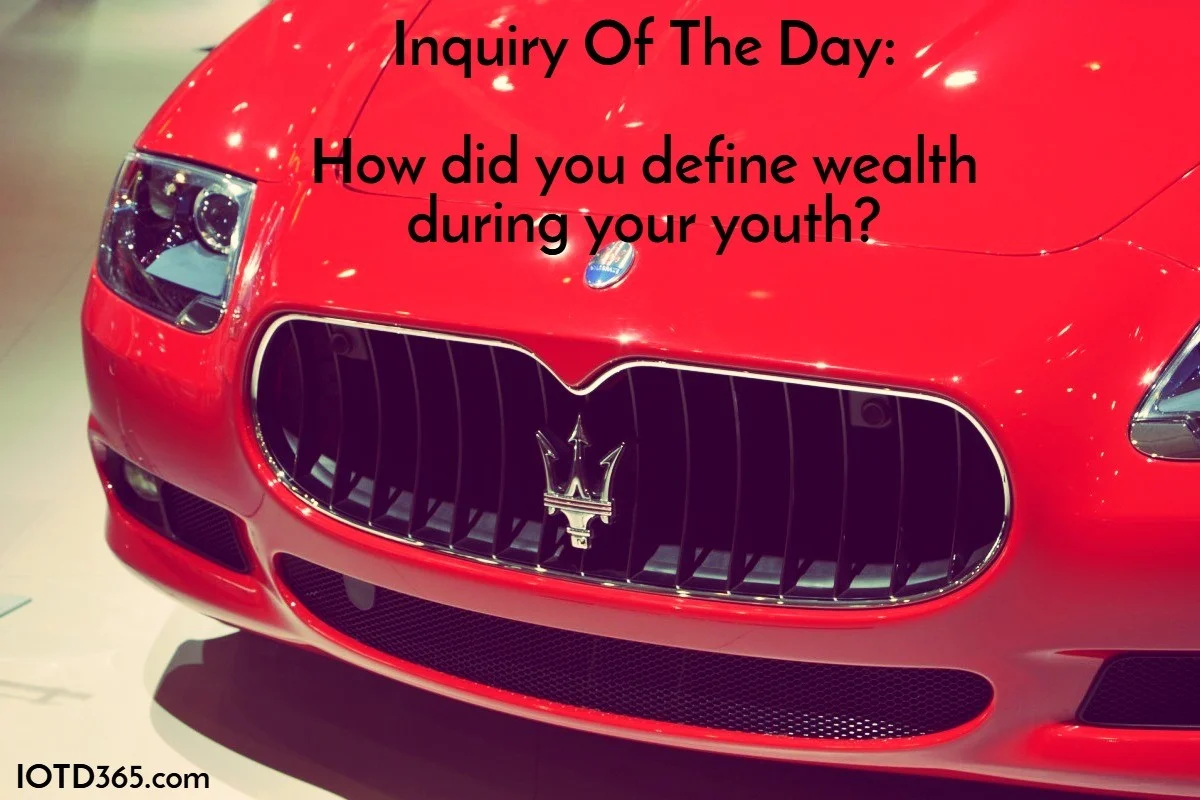
How did you define wealth during your youth?

July 19, 2016

There is always that one family that sticks out in your mind that exemplified wealth when you were growing up. There is something about how they lived, acted or who they knew that just sets them apart, etching this image in our minds as one element of what it means to be rich. Even if your family has money, there is that other family in the next town, you met on an international vacation or that has a bigger jet. There is always something that stands out as just too opulent.

A kiwi and a toothbrush are mine. A classmate often brought kiwis for lunch, and I had never seen this strange exotic fruit before. The fact that he could afford to eat them often was a sure indication he was rich. The other indication of having money to burn, was a scene in the original movie Arthur (1981), starring Dudley Moore. In the scene, Arthur chastises his butler, Hobson, for giving him a toothbrush that he had used the day before. Hobson knew that Arthur never used the same toothbrush more than once. I sat dumbstruck for the next several minutes trying to imagine having enough money that I would use a new toothbrush every day and throw the old one away.

These impressions stick with us and inform how we define monetary satisfaction, determine wealth and if we have "made it". Your memory may be a pair of sneakers, a car, wearing a particular clothing brand, location of family vacations or something majestic like a kiwi or toothbrush. This is an opportunity to be reminded of how wealth is measured as an adult. What is your standard; homes, accessories, family, vacations, friends, time or something else? Metrics are important, we need to ensure we are measuring according to the right benchmark.

How has this youthful definition of wealth stayed with you? How have you achieved the wealth you defined in your youth? How do you define wealth? How do your decisions align with living a rich life?

In Life Operating System Tags wealth, metric, Arthur, memories, definition
Comment

What goal are you proud of achieving?

July 15, 2016

There are two elements to a goal; the journey and the attainment. The ratio is a bit off, the journey is 98% and the attainment is 2%. Unless you are the 58-year-old that still relives your part in an obscure high school football game everytime the Friday night lights power up; then the ratio is flipped. For the rest of us, the time spent to attain the goal is the preparation and the grind to achieve the degree, the medal or the acknowledgment. Historically, I would characterize my attainment 2%, as very stoic. Great, I won an award, let me take it out of the frame and put it in the file cabinet. Disclaimer: my achievements do not include any Nobel prizes.

But, is that the whole story?

Any achievement is done with supporting help from others and celebrating the 2% allows for a moment to reflect and thank those that helped to make it possible. Remaining silent or downplaying the achievement is selfish and robs others of celebrating their contribution in the pursuit of the goal. This also provides an opportunity to inspire others and cheer them along on their journey. The 2% is important.

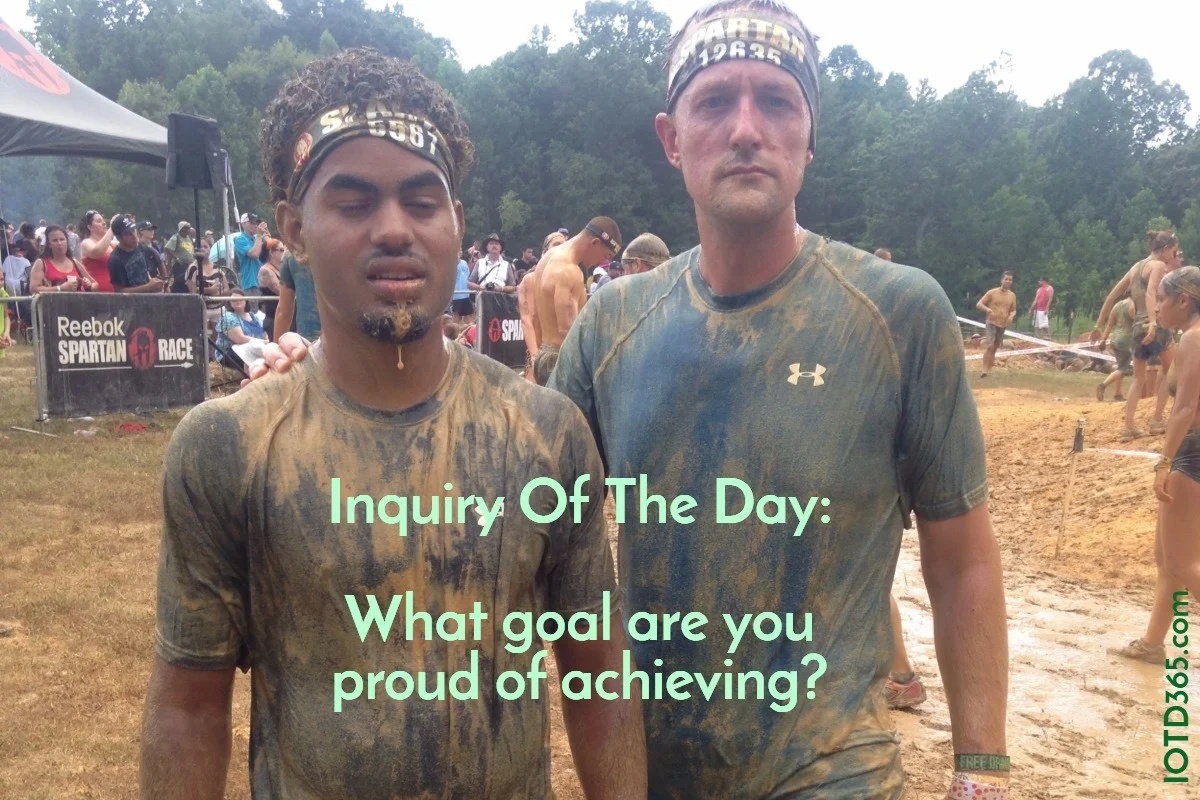
Last year my son and I completed a Spartan Sprint obstacle race. I was very nervous going into the race and nearly backed out the night before the race due to fear of injury. Spoiler Alert: it didn't kill me. We finished, not in record time, but we finished. We made some great memories and will be doing another couple Spartan races this year. Celebrating the completion of the race was an opportunity to thank my son for heaving me over obstacles, walls and whatever else was necessary to keep me going. It would have been a missed opportunity to encourage my son if I had merely filed the finisher medal away and never spoke of it again. We both need to be reminded of the glory of achieving a goal. 

Going Further: How do you acknowledge the goals you have achieved? How do you celebrate with those that have helped and sacrificed for you to achieve the goal? What prevents you from fully celebrating? Are there any achieved goals that were not properly acknowledged? What other question should be asked?

In Life Operating System Tags goal, journey, grind, encourage, thankfullness, celebrate
Comment

How do you combat gossip?

July 14, 2016

The corrosive nature of gossip will quickly cripple any community. The cancerous tendrils quickly divide friends, family and co-workers. This division scars and shuts down the creativity and prevents the interaction of everyone delivering their best.

Bad enough, is when leadership is silent or looks the other way and the cancerous cells multiply. Worse yet is when leadership actively engages in the practice. The task to kill the cancerous effects, will be nothing short of a herculean effort.

Those supporting an organization decided that it was worthwhile to dedicate their precious lives to the common cause. They only have one life and they chose you. You decided to bring them on as the best candidate and gossiping will only prevent them bringing the best they have to offer; aim carefully as you shoot yourself in the foot.

Each one of us must take the opportunity to combat the cancer. Out of the heart speaks and your words are your choice. Choose wisely.

Going Further: Where have you given into the temptation to gossip? What harm have you seen as a result? How have you felt when you have been gossiped about? Where do you need to grow in this area?

In Life Operating System Tags gossip, fight, leadership, empathy, courage, brave
Comment

How do you resist judging a book by it's cover?

July 13, 2016

Our minds are lazy and want to take the easy way out. Impatiently demanding to classify what it sees with the least amount of effort based on its own experience. Efficiency reigns king. It takes a lot of brain power to live with uncertainty and patiently wait to understand the truth. A common emergency response statement is "the first reports are always wrong". This applies to people as well. I look at someone and the combination of a lazy brain that wants to conserve energy, with a quick classification, and my own pride, that reminds me I am always right, ensures I spend a lot of time being wrong.

I do, however, have a perfect record of identifying the physical characteristics of a podcast guest upon completion of the conversation. I have been wrong 100% of the time. It is great sport to spend a couple hours listening to an engaging conversation with a fascinating person, who has found great success in their respective field, and have no idea what they look like. By the end of the discussion, I am giddy with excitement about bumping into them on the street and conduct a Google query to learn that my imagination missed the mark, again.

Yep, my temptation is to serve the beautiful, rich and famous first, then take care of what I perceive as the normal crowd, then take care of who is left. Yes, I know that is wrong and that is where the purposeful internal battle ensues. I intentionally don't identify the race or gender of the person that cut me off in traffic so I don't develop muscle memory that classifies "all (fill in the blank) are poor drivers". I grew up in a very white neighborhood and the predominant black influence in my formative years was the Huxtable family, the guys getting caught on COPS or those I saw on the news. I have to purposely re-write my own snap judgment about the young black male driving a Mercedes. Assuming he is not the drug dealer, but rather a successful doctor, engineer or entrepreneur.

This is a complicated life and at times, I am my own worst enemy, however, the war is being waged. Keep your book cover; I am working on my own re-write and so might at least one other.

Going Further: What people groups do you judge most often? When have you been wrong about someone? What is a step you can take to re-write your default assumptions? What other questions on this topic sting?

In Life Operating System Tags judging, racism, temptation, fight
Comment

When did you last marvel at your body?

July 10, 2016

Regardless of the presence or absence of six-pack abs, perfect skin or pearly white teeth right now, how do you appreciate this physical body? 

The world demands that we are physically never enough and there is always room for growth. But, for the next two minutes, let's suspend any need to change our diet or exercise program and appreciate the body we have. This is not the time for judgment, comparison or self-loathing, but appreciation. This physical frame has carried you through childhood, the tumultuous teen years, the drunken college years to where you are today.

If my body was a car, I would have been on the side of the road a long time ago. Consider how carefully you have fed the machine the specific diet it requires. Consider the exercise and maintenance you have consistently provided to keep the organs and muscles running efficiently. Consider the mental and spiritual care you have provided to nourish the inner self. Consider the chemical concoctions the body has overcome while living a life of anxiety and stress in the modern world. The bodies insistence to stay alive through a lifetime of trauma and abuse is breathtaking. 

We have witnessed the spectrum of people that thrive because of, and in some cases in spite of, their physical bodies. We cheer the one to break the marathon finish line tape for their training and physical prowess. Then we wait and applaud those that finish last to cheer on their tenacity, despite their limitations. Flex your hand and admire the musculature that moves the fingers. Count your heartbeats for a minute and recognize you don't have to will each beat. Consider the complexity of balance and coordination to walk from room to room. Internalize that a marvelous work is staring back in the mirror and this remarkable being is like no other. This marvel is enough to be celebrated. 

Going Further: What trauma has your body healed from? When were you surprised by your bodies performance? What is a nuance of your body? When did your body perform optimally? What would appreciation for you body look like? What other question comes to mind?

In Life Operating System Tags body image, physical, inner self, inspiration, celebrate
Comment

How many questions did you ask last week?

July 9, 2016

40,000 questions in three years. Harvard child psychologist, Paul Harris, determined that children two to five years of age ask about 40K questions and once school starts, the decline begins. The Right Question Institute found that only about 25% of 18 year-olds use questioning on a regular basis. The need to look competent can further limit our questioning once we are engaged in the workforce. The esoteric language of most workplaces includes what feels like a million acronyms that are used in sentences in what sound like alphabet soup if transcribed. I have sat for briefs and not asked for the acronyms to be spelled out thinking I am the only one that was in the dark, only to be asked by someone else on the trip back to the office about the meaning of several acronyms. A similar occurrence has happened with an auditorium full of people when the speaker asks if a particular topic needs an explanation and a single brave soul asks for the explanation to the collective sigh of most of the participants.

What happened between five years old and now? Why did we fall off the questioning cliff? Over the last couple years, classmates do not appreciate my enthusiasm for a topic as I would ask the professor additional questions requiring additional discussion. Generally, I can feel the heat of the stares on my neck, wishing I would just shut-up with the questions. The professor would engage in conversation because there are generally only a few students that will ask questions. I have been known to ask one or two too many questions and frustrate my kids about evening plans, friends or plans for the future. By my count, I am sure it has only happened once.

Paul Sloane posits that asking questions is the single most important habit for innovative thinkers. Mr. Sloane quotes Eric Schmidt, executive chairman of Alphabet, the parent company of Google, as saying "we run this company on questions, not answers.” If our goal is to embrace the future or be innovative in our lives then asking questions need to be a part of our plan. So, what do you think?

Going Further: When did you ask lots of questions? If that has changed, why? How do you handle being asked multiple questions? What prevents you from asking more questions? What other questions should be asked?

In Life Operating System Tags questions, Paul Sloane, Eric Schmidt, Alphabet, Google, innovate, creativity
Comment
← Newer Posts Older Posts →
The Latest RSS

Latest & Greatest

Featured
Sep 14, 2018
The Home Of Inquiry Has Moved
Sep 14, 2018
Sep 14, 2018
Apr 30, 2017
How have cultural expectations shaped you?
Apr 30, 2017
Apr 30, 2017
Apr 23, 2017
How do you fast?
Apr 23, 2017
Apr 23, 2017
Apr 16, 2017
What are your family memories?
Apr 16, 2017
Apr 16, 2017
Apr 9, 2017
How are others showing love to you?
Apr 9, 2017
Apr 9, 2017
Apr 2, 2017
How do you know your commitment will last?
Apr 2, 2017
Apr 2, 2017
Mar 26, 2017
When do you expand your vocabulary?
Mar 26, 2017
Mar 26, 2017
Mar 19, 2017
How do you forage for positivity?
Mar 19, 2017
Mar 19, 2017
Mar 12, 2017
What are you encouraged about?
Mar 12, 2017
Mar 12, 2017
Mar 5, 2017
How can you use your constraints as an advantage?
Mar 5, 2017
Mar 5, 2017

Engage

These INQUIRIES are here for you.

My intention is for you to ask better questions and think deeper.

Our fast paced, always on, society provides little time for reflection. 

After answering the initial inquiry, dig a little deeper and follow-up with a bit more thinking:

What do I think about it?

How can I make it better/worse?

How does this influence my life and those around me?

How can I be more generous?

© Kenneth Woodward and Inquiry Of The Day (IOTD) 365 (IOTD365), 2016.

Unauthorized use and/or duplication of this material without express and written permission from this site’s author and/or owner is strictly prohibited. Excerpts and links may be used, provided that full and clear credit is given to Kenneth Woodward and IOTD365 with appropriate and specific direction to the original content. Give me a chance to say "Yes".

Powered by Squarespace